
PATNA: As Bihar heads into the first phase of its elections on November 6, both the ruling and opposition alliances have pushed forth competing narratives over empowerment and unemployment, in an attempt to appeal to young voters who constitute around 15–17% of the total electorate.
The NDA, led by the JD(U) under Chief Minister Nitish Kumar, has crafted their campaign based on a slew of cash assistance schemes and infrastructure development as evidence of progress.
The BJP, working in coordination with the RSS across Bihar’s Hindi-speaking heartland, has revived its old charge of “Jungle Raj” against the RJD.
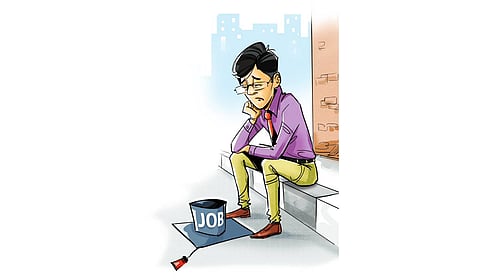
The Mahagathbandhan has countered this charge by invoking the growing frustration among jobless youth.
“It is true that NH and other networks of roads have been made widely available and electricity reached across the remotest part of the state also. But what will we do with NHs or SHs or electricity if we are unemployed? Tell us how come these make us employed — only through setting up small business outlets along the roads? What we need is employment,” remarked Yogendra Yadav in Bakhtiyarpur, illustrating how deeply unemployment has entered the psyche of young voters.
Over 3.75 crore voters, including 1.98 crore women, will cast their votes across 45,341 polling booths and 17 auxiliary booths in 18 districts.
The first phase is crucial for the NDA, with 16 ministers contesting, alongside key opposition figures, including the Mahagathbandhan’s chief ministerial candidate, Tejashwi Yadav.
The RJD, though not fielding many new faces, hopes to consolidate its base, while the NDA has opted for a mix of incumbents and fresh candidates, dropping some of its sitting MLAs.
Voter turnout, particularly among women and youth in remote constituencies, is expected to offer an early indication of the election’s direction.
However, this year’s polls are notably more complex than before, as both alliances have placed heavy emphasis on promises of employment, empowerment, and welfare, leading to heightened public scrutiny over their credibility.
The emergence of the Jan Suraaj Party has added another dimension to the contest. Although its impact appears limited in the districts voting in the first phase, the party has reportedly generated social awareness about Bihar’s longstanding developmental challenges.
In urban and semi-urban areas such as Patna, its candidates have made a perceptible presence, though voters remain non-committal about which alliance they ultimately favour.
Overall, the first phase of polling represents a test not only of political strength but also of public faith in the promises of jobs, growth, and empowerment — issues that continue to shape Bihar’s political and economic future.
