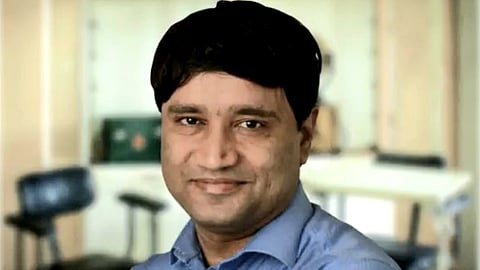

DEHRADUN: In a development that legal analysts are calling unprecedented in the country’s judicial history, a total of 15 judges across various courts and tribunals have now recused themselves from hearing matters involving Ramon Magsaysay Award-winning Indian Forest Service (IFS) officer, Sanjiv Chaturvedi. The latest instance involves Justice Ravindra Maithani of the Uttarakhand High Court, who recused himself on September 26 from a contempt case filed by Chaturvedi against members of the Central Administrative Tribunal (CAT).
Justice Maithani’s order simply directed the matter to be listed before "another Bench of which I (Ravindra Maithani, J.) am is not a Member," offering no further explanation. This marks the third High Court judge in Uttarakhand alone to step aside from Chaturvedi’s cases this year.
Justice Rakesh Thapliyal recused himself in May 2023 from an appraisal report case, followed by Justice Manoj Tiwari in February 2024 concerning the officer’s central deputation. "The sheer volume of judicial recusals concerning a single litigant is deeply concerning," stated a senior advocate aware of the proceedings, who requested anonymity. "While judges have the right to recuse, when the number reaches this scale—spanning the Supreme Court, High Courts, and CAT—it raises serious questions about the continuity of justice."
The tally of 15 recusals spans the entire judicial hierarchy. This count includes two Supreme Court judges—Justice Ranjan Gogoi (2013) and Justice UU Lalit (2016)—three High Court judges, two lower court judges, and eight CAT members, including a former Chairman, who recused themselves from a high-profile case concerning allegations of corruption in Haryana.
This year has seen four recusals. In addition to the High Court judges, ACJM Neha Kushwaha recused herself in April 2025 from a defamation case, citing "previous family relations" with another CAT judge. In February 2025, a CAT Division Bench of Justices Harvinder Oberai and B Anand also recused themselves without comment.
The history of judicial distance in Chaturvedi’s legal battles dates back to 2013. Despite the repeated hurdles, Chaturvedi has consistently pursued litigation regarding service matters and alleged harassment stemming from his anti-corruption work. Legal experts note that the repeated recusals force continuous administrative reshuffling, potentially delaying resolution in sensitive public interest cases.
