
NEW DELHI: The Centre on Monday told the Supreme Court that climate activist Sonam Wangchuk is receiving “better medical care” in Rajasthan than he would in Ladakh, and that his health condition is “perfectly good” while in custody.
Making the submissions, Additional Solicitor General (ASG) K M Nataraj, appearing for the Union government, said Wangchuk was being provided the best possible treatment at AIIMS, Jodhpur.
Responding to queries raised by the apex court in the previous hearing regarding Wangchuk’s health, Nataraj told a bench comprising Justices Aravind Kumar and P B Varale, “So far as the health issue is concerned, rather than being in Ladakh, Jaipur is the best place. He is getting better medical care than Ladakh. There is AIIMS in Rajasthan, whereas in Ladakh, there would have been nothing.”
Earlier, on February 4, the court had asked the Centre to apprise it of any reconsideration of Wangchuk’s detention under the National Security Act (NSA) on “health grounds”.
During Monday’s hearing, the bench sought to know whether any progress had been made pursuant to its request to review the detention in light of Wangchuk’s allegedly deteriorating health.
In response, the ASG said no progress had been made so far. “No progress has been made as of now regarding the review of Wangchuk’s detention. We need more time,” Nataraj told the court.
The ASG then sought an adjournment of the matter for a week. However, the court observed that the case involved a habeas corpus petition, which could not be delayed indefinitely, and fixed the matter for further hearing on Wednesday, February 11.
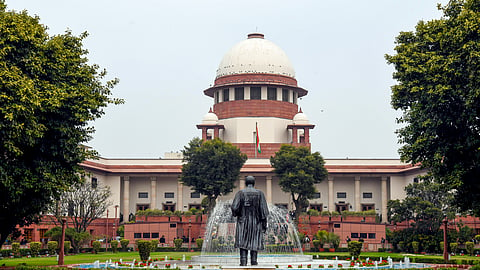
The Supreme Court was hearing a plea filed by Wangchuk’s wife, Gitanjali J Angmo, challenging his preventive detention under the NSA.
Wangchuk was arrested in Ladakh on September 26, 2025, following protests and violence linked to demands for statehood and Sixth Schedule status for the Union Territory. He was subsequently detained under the NSA and lodged at Jodhpur Central Jail in Rajasthan after protests erupted in Leh in September 2025.
