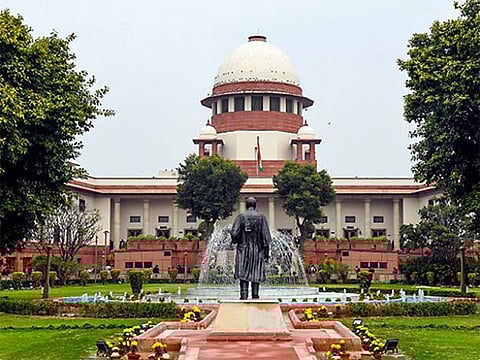

The Supreme Court of India on Monday issued notice to the Union government of India on a batch of petitions challenging certain provisions of the Digital Personal Data Protection (DPDP) Act, 2023, marking the beginning of judicial scrutiny of the country’s new data protection framework. The court sought the Centre’s response to the constitutional concerns raised by the petitioners but declined to grant any interim relief against the operation of the law at this stage.
The petitions question amendments introduced by the DPDP Act that affect the Right to Information regime, arguing that they significantly dilute citizens’ access to information. The primary challenge is to provisions that expand the exemption for “personal information,” which petitioners say removes the long-standing public interest test that earlier allowed disclosure of personal data when transparency outweighed privacy concerns. According to the petitioners, the revised framework creates a blanket bar on disclosure and disrupts the balance that courts have previously evolved between the right to privacy and the public’s right to know.
Those who have moved the court include journalists, transparency advocates and civil society groups, who contend that while data protection is a legitimate state objective, the current law goes beyond safeguarding privacy and risks shielding public authorities from scrutiny. They argue that the amendments weaken accountability mechanisms, particularly in cases where information about public officials or the use of public resources is sought. The pleas also raise broader objections to the structure of the Act, including the degree of discretion vested in the executive and the absence of clear safeguards to prevent misuse of exemptions.
During the hearing, the bench, led by Chief Justice Surya Kant along with Justices Joymalya Bagchi and Vipul M. Pancholi, observed that the issues raised involve important constitutional questions that require detailed examination. At the same time, the court indicated that it would be slow to interfere with a law enacted by Parliament without hearing the government’s full response and considering the matter comprehensively. The bench therefore limited its order to issuing notice and directed the Centre to place its stand on record.
The case now sets the stage for a wider debate on how India’s data protection framework should reconcile competing constitutional values. While the right to privacy has been recognised as a fundamental right, the petitioners maintain that transparency and free flow of information are equally essential to democratic governance. The outcome of the proceedings is expected to have significant implications for the future of the Right to Information regime and for how personal data held by public authorities is treated under law.
With notices issued and replies awaited, the challenge to the DPDP Act is likely to be heard in detail in the coming weeks, as the Supreme Court examines whether the contested provisions strike a constitutionally permissible balance between privacy, transparency and accountability.
