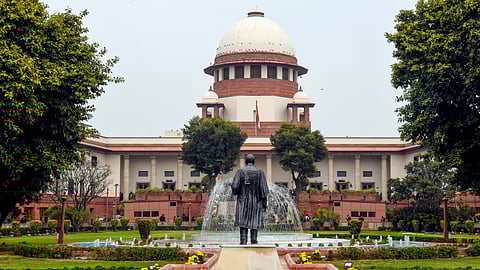

NEW DELHI: The Supreme Court on Friday said the likelihood of evidence tampering or influencing witnesses after grant of bail in offences involving sexual assault against children is a legitimate and grave concern.
A bench of Justices B V Nagarathna and R Mahdevan made the observations as it cancelled the bail granted by the Allahabad High Court to a youth from Shamli in Uttar Pradesh accused of repeated penetrative sexual assault under armed intimidation of a minor, and recording the act for the purpose of blackmail.
The Bench said such conduct has a “devastating impact on the life of the victim” and “shakes the collective conscience of society.”
“The safety of the victim and the need to preserve the purity of the trial process assume paramount importance,” the Bench said.
In its 21-page judgment, the court noted that while bail should not be refused mechanically, it must also not be granted on an incorrect appreciation of facts, material omissions, or in a manner that results in a miscarriage of justice. In such circumstances, it said, the Supreme Court is empowered to interfere.
“In the present case, the grant of bail by the High Court is vitiated by material misdirection and non-consideration of relevant factors, rendering the order manifestly perverse,” the Bench said.
Setting aside the Allahabad High Court’s order, the Supreme Court directed the accused to surrender before the jurisdictional court within two weeks. In the event of non-compliance, the trial court was directed to take appropriate steps in accordance with law to secure his custody.
The Bench said it was mindful that the POCSO Act is a beneficial legislation enacted to protect children from sexual offences and that proceedings under the Act require prompt and sensitive handling.
“This Court has consistently emphasised the need for expeditious disposal of POCSO cases. At the same time, prosecutions must be subjected to careful judicial scrutiny to ensure that the process of law does not become oppressive,” the judgment said.
Accordingly, the trial court was directed to accord priority to the case and conclude the trial expeditiously, in accordance with law.
The Supreme Court also flagged serious flaws in the High Court’s order, stating that it had failed to adequately consider the nature and gravity of the offence and the statutory rigour mandated under the provisions of the POCSO Act.