
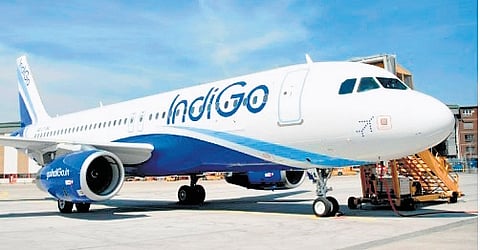
IndiGo assures DGCA of stable operations, no cancellations after February 10
NEW DELHI: India’s largest airline, IndiGo, has assured the aviation regulator, the Directorate General of Civil Aviation (DGCA), that it will maintain operational stability and have adequate flight crew for its services from February 10, the regulator said on Tuesday.
The assurance comes in the wake of large-scale flight cancellations between December 1 and 9 and a February 10 deadline set by the authorities for the airline to resolve its operational issues. IndiGo had earlier been granted relaxations under the Flight Duty Time Limitations (FDTL), allowing additional rest and fewer night landings for cockpit crew.
At a review meeting held on Monday, January 19, IndiGo informed the DGCA that by the deadline it would have 2,400 Pilots in Command on its Airbus fleet against a requirement of 2,280, and 2,240 First Officers against a requirement of 2,050. “IndiGo assured operational stability and no flight cancellations after February 10, 2026, based on the current approved network, above crew strength, and the removal of the two FDTL exemptions approved on December 6, 2025.”
On December 9, the Ministry of Civil Aviation directed IndiGo to cut 10 per cent of its domestic operations, resulting in 214 flights per day being dropped from its approved schedule of 2,145 daily flights.

The DGCA said IndiGo has so far submitted four weekly reports and three fortnightly reports, participated in weekly review meetings, and shared updated data on critical operational parameters. These included flight cancellations and delays, crew positioning and availability, crew leave and standby utilisation, system performance, and other key operational indicators.
The regulator said the reports also covered critical manpower parameters and a detailed Corrective Action Plan outlining steps to ensure operational stability and compliance with revised FDTL norms. Additional disclosures included standby utilisation for the Airbus fleet, pilot training plans and attrition forecasts, pending endorsements, command upgrades and First Officer hiring, pilot release timelines, required versus available pilot strength, and fleet availability across Airbus, ATR and wet-leased aircraft.
Reiterating findings from a recent probe, the DGCA said, “The disruptions stemmed from mismanagement of adequate flight crew, inadequate regulatory preparedness at the operator level, and shortcomings in system software support, management structure, and operational control.”
It added that IndiGo’s planning processes failed to identify operational deficiencies or maintain sufficient buffers. “There was an overriding focus on maximizing utilization of crew, aircraft, and network resources, which led to reduced roster buffer margins. Crew rosters were designed to operate at the limits of permissible duty periods, with increased reliance on dead-heading, tail swaps, extended duty patterns, and minimal recovery margins. This approach compromised roster integrity and operational resilience and adversely impacted the effective implementation of the revised Flight Duty Time Limitations (FDTL) provisions.”
The DGCA said these corrective steps were part of stabilisation and enhanced oversight measures taken by the Ministry of Civil Aviation in coordination with the regulator. From December 6 to 30, 2025, the DGCA deployed two Flight Operations Inspectors along with passenger facilitation staff at IndiGo’s Operations Control Centre and key airports to monitor daily operations, passenger handling, and regulatory compliance.
The regulator said it will continue to closely monitor IndiGo’s operations, with particular focus on roster integrity, crew availability, buffer adequacy, system robustness, and adherence to FDTL norms.