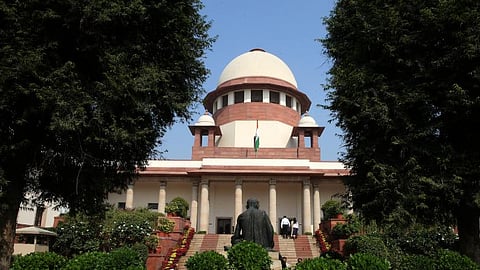

NEW DELHI: In a major relief to the Punjab Kesari media group, the Supreme Court on Tuesday passed an interim order restraining the Punjab government from taking any coercive action that could disrupt the publication of the newspaper.
A three-judge bench headed by Chief Justice of India Surya Kant, and comprising Justices Joymalya Bagchi and Vipul M. Pancholi, directed that the printing presses of the vernacular daily shall continue to function uninterruptedly, notwithstanding the Punjab State Pollution Control Board’s decision to cut electricity over alleged violations.
The interim relief was granted after an urgent mentioning by senior advocate Mukul Rohatgi, appearing for the Punjab Kesari Group, which alleged that it was being selectively targeted by the Aam Aadmi Party (AAP)-led state government over unfavourable reportage.
"Without prejudice to the rights of the parties and without expressing any opinion on the merits of the case, it is directed that the printing press shall continue to operate uninterruptedly, while the commercial units can remain shut for the time being,” ordered the top court.
Punjab Kesari claimed in the court that the Punjab Pollution Control Board had ordered the closure of one of its printing presses and a hotel run by its management as a retaliatory measure following the publication of a news report critical of the state government. Rohatgi described the action as a direct attack on press freedom, arguing that electricity to the printing press had been disconnected solely due to adverse coverage.
"The interim stay on closure of the printing press of the newspaper would remain in force a week after pronouncement of the order by the HC to enable aggrieved parties to challenge the HC order," the apex court said on its interim order.
The Punjab government, represented by senior advocate Shadan Farasat, countered the allegations, stating that the hotel faced pollution-related issues and that only one unit of the printing press had been affected and that two liquor bottles were found in the printing press. The state also informed the court that the Punjab and Haryana High Court had already heard the matter in detail and reserved its verdict.
Questioning the state’s action, the Supreme Court observed that while the hotel closure could be examined separately, shutting down a newspaper raised serious concerns. “Hotels can remain shut, but why the newspaper should be?” the bench remarked.
