
NEW DELHI: US Ambassador to India Sergio Gor on Wednesday credited India’s continued purchase of Russian crude with helping stabilise global oil prices as the West Asia conflict disrupts energy flows. His remarks came as External Affairs Minister S Jaishankar held discussions with Russian Foreign Minister Sergey Lavrov amid growing concerns over energy security and supply disruptions caused by tensions in the region.
“India has been a great partner in maintaining stable oil prices around the world. The United States recognises ongoing purchases of Russian oil as part of this effort,” Gor said in a post on X, adding that India’s role as one of the world’s largest consumers and refiners makes cooperation between Washington and New Delhi critical for maintaining energy market stability.
The comments come at a time when the ongoing conflict has severely disrupted maritime traffic through the Strait of Hormuz, a strategic chokepoint linking the Persian Gulf with the Gulf of Oman that carries roughly one-fifth of global oil and liquefied natural gas shipments. The conflict, which began on February 28 after strikes by United States and Israel on Iran and subsequent retaliatory attacks by Tehran on Gulf targets hosting American assets, has now entered its twelfth day.
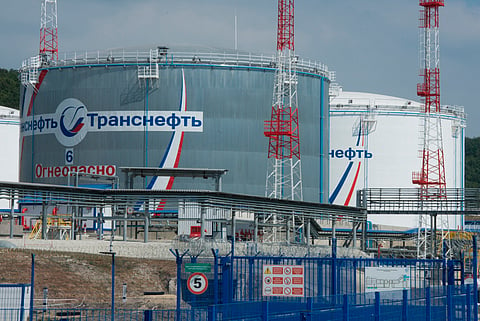
With tanker movement through the Strait severely curtailed, India has rapidly increased its purchases of Russian crude. Ship-tracking data from commodity analytics firm Kpler shows that India’s imports of Russian oil surged to around 1.5 million barrels per day (bpd) in the first 11 days of March, significantly higher than the 800,000 to 1 million bpd expected before the crisis began. Trade sources say volumes could rise further if regular West Asian shipments remain stalled.
The surge in demand has also pushed up the price of Russia’s Urals crude at Russian ports. According to market data cited by traders, Urals was offered at around $76 per barrel on a free-on-board basis on Monday, compared with roughly $45 per barrel two weeks earlier, reflecting both supply disruptions and renewed demand from buyers seeking alternatives to Gulf crude.
Meanwhile, Scott Bessent, the US Treasury Secretary, said Washington was working with major energy producers and consumers to maintain stability in global markets. “Under President Donald Trump’s leadership we are working with the world’s largest producers, consumers and refiners to maintain stability in the world’s energy markets while we eliminate threats to our safety and security,” Bessent said on X.
Against this backdrop, Jaishankar held a phone conversation with Lavrov to discuss the West Asia conflict and its diplomatic implications. “A good telecon with Foreign Minister Sergey Lavrov of Russia. Shared our assessments on the West Asia conflict and related diplomatic efforts. Also took stock of our bilateral cooperation agenda,” Jaishankar said. It was not immediately known whether India’s procurement of Russian oil figured in the discussion.
The call came days after the United States issued a temporary 30-day waiver allowing Indian refiners to continue purchasing Russian oil, citing disruptions in global energy markets. Jaishankar also spoke with European Union foreign policy chief Kaja Kallas about the crisis and its economic repercussions.
India’s vulnerability to the disruption underscores the stakes involved. The country imports about 88 per cent of its crude oil, consuming roughly 5.8 million bpd, with 2.5 to 2.7 million bpd typically passing through the Strait of Hormuz. Around 55 per cent of India’s LPG and 30 per cent of its LNG consumption is also linked to the route.
Stockpiles of liquefied petroleum gas and liquefied natural gas are estimated to cover only 25–30 days and 10–12 days respectively, increasing the urgency of securing alternative supplies.
The crisis has also raised concerns about the safety of Indian maritime personnel. According to officials, 28 Indian-flagged vessels are currently operating around the Strait of Hormuz 24 west of the strait carrying 677 Indian seafarers and four east of the strait with 11 crew members. Two Indian nationals working on merchant vessels have died in incidents linked to the conflict, while one remains missing. Several Indians have also been injured across the Gulf region, including one in Israel and another in Dubai.
