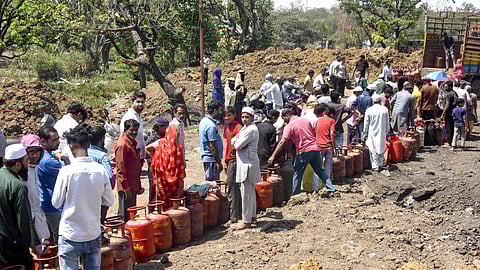

MUMBAI/ SRINAGAR/ AHMEDABAD/ BHOPAL: Amid the ongoing war in West Asia, states across India are struggling with cooking gas shortages, prompting authorities to explore alternative solutions and clamp down on hoarders and black-marketers.
Maharashtra Food and Civil Supplies Minister Chhagan Bhujbal announced that kerosene will now be made available at petrol pumps across the state as a substitute for LPG cylinders. Bhujbal said he met officials in a bid to boost LPG production from 9,000 to 11,000 tonnes daily, prioritising domestic consumers.
Hospitals, educational institutions, old age homes, crematoriums, medical facilities, and defense factories have also been designated priority recipients. He stressed that kerosene supplied through petrol pumps will prevent adulteration and ensure safe usage.
The minister also addressed black marketing, stating 1,208 cylinders were seized recently, recovering ₹33 lakh in illicit sales. District collectors have been instructed to monitor local markets to prevent exploitation.
In Jammu & Kashmir, residents are facing long queues at LPG outlets, with some waiting hours despite having OTPs for home delivery. Delivery personnel have expressed reluctance to supply cylinders due to crowd interference and security concerns.
Jagmohan Singh, a local Indane distributor, said that stock is adequate, but the non-functioning OTP system and panic buying are worsening the crisis. Many families have resorted to cooking on electric heaters and induction stoves.
Gujarat is witnessing rising costs in funerary services as well. Crematoriums like Ramnath Ghela in Surat, which previously received free gas under CSR arrangements, now face charges for fuel, potentially adding ₹1,100 per cremation.
Crematorium managers warn this could strain both trusts and bereaved families. Ramnath Ghela Crematorium Trust manager Jayesh Umrikar told The New Indian Express, the development has created uncertainty for crematorium management.
In a major crackdown in Madhya Pradesh, authorities have seized 1,357 cylinders across 1,025 locations to curb black marketing, registering eight FIRs. A six-member state-level committee has been constituted to coordinate with oil companies and monitor the supply of petrol, diesel, CNG, PNG, and LPG cylinders.
Consumers are urged to avoid unnecessary bookings, while district administrations have been tasked with ensuring timely distribution and curbing misinformation.
Officials emphasise that adequate LPG and fuel stocks exist, and the government is actively overseeing operations to maintain uninterrupted supply amid rising demand and regional tensions.
