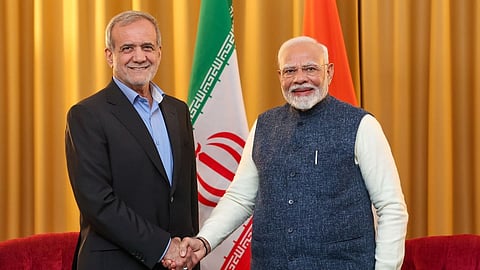

NEW DELHI: Prime Minister Narendra Modi on Saturday stressed the urgency of protecting global shipping routes and critical infrastructure during a phone call with Iran’s President Masoud Pezeshkian, as tensions in West Asia continue to raise concerns over regional stability and supply chains.
The conversation, their second since the outbreak of hostilities on February 28, comes at a time of heightened geopolitical uncertainty impacting energy flows and maritime trade corridors. Modi conveyed greetings on the occasions of Eid and Nowruz, while also using the exchange to press India’s concerns over security and economic disruptions.
In a post on X, Modi said, “Spoke with President Dr. Masoud Pezeshkian and conveyed Eid and Nowruz greetings. We expressed hope that this festive season brings peace, stability and prosperity to West Asia.” “Condemned attacks on critical infrastructure in the region, which threaten regional stability and disrupt global supply chains,” the post said.
The Prime Minister emphasised that uninterrupted maritime movement remains vital for global commerce. “Reiterated the importance of safeguarding freedom of navigation and ensuring that shipping lanes remain open and secure,” he said, reflecting India’s strategic stakes in key sea routes linked to energy imports and trade.
The call also highlighted India’s immediate consular priorities. Modi appreciated “Iran’s continued support for the safety and security of Indian nationals in Iran,” amid concerns for diaspora populations in conflict-affected countries in the region. India has over one crore of its nationals residing in the West Asia region.
The latest exchange builds on an earlier conversation between the two leaders this month, when Modi had flagged the “serious situation in the region.” At the time, he had expressed “deep concern over the escalation of tensions,” including civilian casualties and damage to infrastructure. He had also stressed the need for the “unhindered transit of goods and energy,” identifying these as critical to India’s economic interests.
PM Modi has stepped up diplomatic outreach amid the escalating West Asia crisis, engaging a wide spectrum of global leaders to address rising security and economic concerns. On Friday, Modi spoke with Bahrain king Hamad Bin Isa Al Khalifa, during which he condemned attacks on energy and civilian infrastructure in the region, warning of their broader implications for stability and global markets.
The conversation is part of an intense round of high-level contacts over recent days. Modi has been in touch with leaders of Malaysia, Oman, France, Kuwait, the UAE, Israel, Iran, Saudi Arabia, and Qatar, signalling India’s proactive diplomatic positioning as tensions in Iran and the Gulf region deepen.
