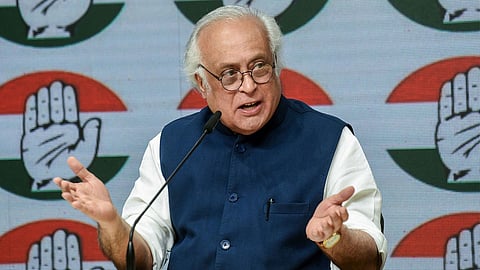

NEW DELHI: Senior Congress leader Jairam Ramesh on Sunday intensified his attack on the Centre over the Rs 72,000 crore Great Nicobar Island Development Project, alleging that the environmental studies used to grant clearances for the mega infrastructure venture were “grossly inadequate” and reduced the Environmental Impact Assessment (EIA) process to a “mockery”.
In a letter to Union Environment Minister Bhupender Yadav, Ramesh questioned the Ministry of Environment, Forest and Climate Change’s claim that the ecological impacts of the project were being “effectively managed”. He alleged that the clearances were based on hurried assessments conducted over a few days and weeks in one of India’s most ecologically sensitive island regions.
The Congress MP said the government’s own regulations require detailed and multi-season environmental studies for projects of this scale, particularly in the Andaman and Nicobar Islands.
Citing a November 3, 2009 Office Memorandum issued by the Ministry, Ramesh said port projects in the islands must undergo “comprehensive Environmental Impact Assessment including physical and mathematical modelling and ground verification”. He said a proper baseline assessment should cover at least three seasons to capture ecological variations and biodiversity patterns.
Ramesh said he could not find the “comprehensive and robust EIA studies” referred to in the ministry’s Frequently Asked Questions issued on May 1, 2026. Instead, he pointed to the Final EIA report submitted in March 2022, which showed that baseline environmental studies were conducted only during the winter season between December 2020 and February 2021.
Calling the exercise a “Rapid EIA”, the Rajya Sabha MP said a three-month, single-season study was insufficient to assess the environmental consequences of a large-scale port and infrastructure project in a biodiversity-rich island ecosystem.
He also alleged that biodiversity assessments linked to the project were conducted over short periods. According to the letter, a “Quick Primary Survey of Ecology and Biodiversity” was carried out between December 14 and 22, 2020, while the survey on leatherback turtles lasted from February 12 to 18, 2021.
Ramesh cited passages from the EIA report, claiming the study acknowledged that biodiversity mapping remained incomplete because of the island’s dense forests. Quoting the report, he said: “Based on our site observations, it appears that what is uncovered so far is not complete and what is hidden may be even more valuable.” He also questioned studies conducted by institutions including the Zoological Survey of India and the Wildlife Institute of India.
According to Ramesh, the Zoological Survey relied on baseline data collected between February and March 2021, while the Wildlife Institute’s report described itself as a “Rapid Assessment Study” conducted over five days in April 2021.
Describing the environmental studies as “an insult to science”, the Congress leader alleged that the clearances were granted on the basis of incomplete ecological data.
Ramesh also objected to the Centre’s refusal to publicly release the report of the High-Powered Committee constituted after proceedings before the National Green Tribunal examining clearances linked to the project.
Questioning the “logic and legality” behind classifying the report as confidential, he said that when EIA reports, detailed project reports and airport DPRs related to the project were already in the public domain, there was no justification for withholding the committee’s findings.
Warning that the island’s “globally unique” ecosystem faced irreversible damage, Ramesh said compensatory afforestation could not offset the environmental destruction likely to be caused by the project. He added that several security experts had argued India’s strategic interests could be safeguarded without causing “such ecological devastation”.
