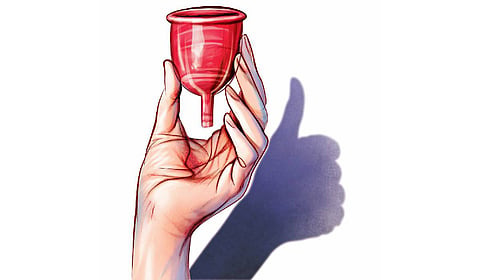

BENGALURU: As Karnataka prepares to roll out menstrual cups for girls in government schools, educators, parents and health experts caution that the initiative’s success depends on busting myths and deep-rooted stigma around menstruation, particularly in rural and marginalised communities.
Teachers in government schools say many girls hesitate to speak openly about menstruation due to family restrictions and social norms. Civil society organisations working at the grassroots say peer-led approaches have shown promise, but parental acceptance remains a challenge. Educators pointed out parental resistance driven by myths linking internal menstrual products to virginity, marriage prospects and fertility issues among schoolgirls.
Highlighting the health benefits, gynaecologist Dr Pallavi Prasad said, “Menstrual cups are safe for adolescents, do not affect virginity or future fertility, reduce rashes and allergies, allow participation in sports and swimming, and create less biological waste,making them ideal for school-going girls.”
Saraswathi K, director of Rural Literacy and Health Program (RLHP), an NGO working in urban slums and rural villages, said adolescent girls are more open to trying menstrual cups when discussions take place within peer groups. “Some girls discontinue the use due to discomfort, while others adapt and encourage their peers”, she said.
Parents hesitate even though there is no medical basis for it. “Fear and misinformation are still strong, in rural areas primarily. Parents lack exposure and access to information. But after a few awareness sessions, they realise that girls using it are safe, and the fear slowly begins to fade”, said Sowmya, a parent. Mental health professionals say resistance is rooted more in cultural anxiety than health concerns.

Denita Thomson, a trainee counselling psychologist who conducts sessions for adolescent girls in schools, said menstrual cups challenge long-held beliefs around purity. “Anything involving vaginal insertion is often wrongly linked to sexual activity. Menstrual cups encourage girls to have a direct relationship with their bodies, it may feel threatening in settings where bodily autonomy is still questioned,” she said.
Educationist Niranjanaradhya V P stressed the need to focus on parents. “This stigma is more prevalent in rural and marginalised communities. While the government and NGOs have worked on adolescent and reproductive health programmes, educating parents at scale is crucial,” he said.