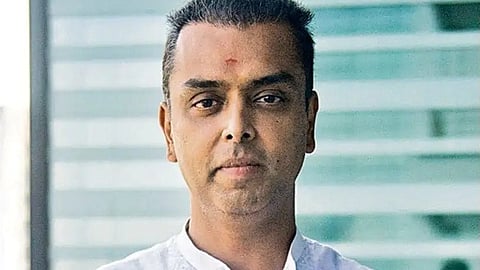

With six Uddhav Thackeray MPs joining the Eknath Shinde camp, Shiv Sena Rajya Sabha MP and former Union MoS Milind Deora says elected representatives have to face voters and partymen in their constituencies, and if they are still taking such difficult decisions, there must be compelling reasons behind them.
He tells Sudhir Suryawanshi most Opposition parties are family-run entities that ignore their structural and democratic shortcomings, leaving them ill-equipped for increasingly competitive political landscape. Excerpts:
Why’s everyone in a hurry to join ruling parties in states and the Centre?
People are willing to be in the Opposition as well. But we have to accept that the dynamics of politics have changed a lot. Different states have different political realities. If you go to Europe or America, you don’t have parties that have been captured by individuals and families. But in India, a large number of parties have become family-controlled from generation to generation. The first generation can capture the imagination of people, but it is not necessary the second and third generations will do the same. That is where the crisis lies.
Look at the difference between Shiv Sena and Shiv Sena (UBT); the level of political drive is different because of the generation gap, accessibility, working style, approach and other factors. Politics is becoming more competitive, and governance also has to become more efficient. There is only one communist party in the Opposition that has not been captured by any particular family.
In Maharashtra, there are mainly six political parties, three in power and three in the Opposition. If smaller parties are considered, the number rises to seven or eight. When you have so many parties, every person, whether in the opposition or in government, has to become far more agile. If parties fail to do that, volunteers, voters and elected representatives become impatient, and that often forces many of them to join the ruling side.
What is your view on Operation Tiger?
The people rebelling against their leadership have been disgruntled for quite some time. It is not something that happened suddenly. In such a scenario, it is natural for opponents to take advantage. This can happen in any profession. The source of this disgruntlement lies within Shiv Sena (UBT) itself.
Ultimately, elected representatives have to return to their constituencies and face voters. They also have to face local party workers. If they are taking such difficult decisions, there must be significant reasons behind them. A party must introspect and identify the underlying malaise rather than dismissing the situation as if it has done nothing wrong, only to face the same problem repeatedly. Politics is a competitive world. Parties must respond more quickly.
In a healthy democracy, the role of the Opposition is important. If everyone joins those in power, then who will play the role of the Opposition?
I don’t think people are averse to being in the Opposition. There are voters who will always support the Opposition. The Opposition also has a fixed vote base, but it has to evolve with changing times.
Take West Bengal, for example. I don’t know what will happen with those MPs who broke away from TMC. Tomorrow, they may not directly join BJP and may instead remain in the Opposition. I do not know.
The Opposition must attack the government, criticise it and score political points. That is part of its job. But it must also play a constructive role. However, the problem with many opposition parties is that they are now run by second-, third- and fourth-generation political families.
The present leadership of family-held parties is very different from their fathers, grandfathers, grandmothers or ancestors. If they don’t buckle up and become more active, others will occupy that space.
So, do you mean that family-run political parties are the bigger problem for the Opposition?
I don’t think there is anything inherently wrong with dynastic politics; it happens all over the world. It happens in the US too, with political families such as the Bushes and the Kennedys. I am also a product of dynastic politics. However, there is a very big difference between someone’s relative entering politics and generations of one family running a party without accountability.
