
JAIPUR: Campaigning has concluded for the final phase of Panchayat elections in Rajasthan. Voting for over 3,700 Panchayats in 25 districts will take place on Saturday, November 14, and the results will be announced on November 20.
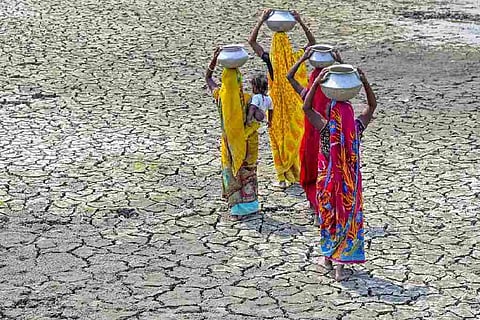
Severe drought in parts of the State and an acute drinking water crisis have dominated political campaigning in the final phase.
In 2026, Rajasthan faced the worst drought in the last 10 years.
A weak monsoon has resulted in widespread damage to Kharif crops and a severe shortage of drinking water and fodder in many rural areas. This monsoon, the state received an average rainfall of around 350 mm, which is about 17.4% less than normal rainfall.
While Pali received 58% less rainfall, Jaisalmer and Jalore witnessed over 50% less rainfall than normal.
This situation forced the state government to declare 80 tehsils in 14 districts as drought-affected. According to a notification from the Disaster Management and Relief Department, 69 of the 80 affected tehsils have been categorised as severely drought-affected. This notification will remain in effect for the next six months.
Western Rajasthan has been hard hit by the drought crisis.
Of the state's 693 dams, over 200 are empty, and just 16% of water remains in the reservoirs of the Jodhpur division. Furthermore, cattle herders are facing a significant challenge as fodder prices have more than doubled in the past few months.
Political tensions are high between the ruling BJP and the Congress.
Former Chief Minister Ashok Gehlot has accused the BJP government of being slow to grasp the severity of the drought and delaying relief efforts. He has also criticised the state government for not receiving adequate water from Punjab.
Gehlot claims that famine-like conditions prevail, and people in Jodhpur are desperate for water.
He wrote on social media, “There is a famine-like situation in the state. At this time, water is the top priority for western Rajasthan, but the people of Jodhpur are desperate for water. For two and a half years, Jodhpur has been receiving approximately 2.5 mcft of water less every day. The drinking water crisis in the city and villages is deepening.”
Gehlot wrote on X: “The Punjab government is reducing water supply, citing farmer protests and canal maintenance as excuses. The supply is reduced without informing the Rajasthan government. In such a situation, the state government should not remain a mute spectator….When Jodhpur is thirsty, what is the government waiting for?”
Gehlot also launched a scathing attack on the Bhajan Lal government over the filing of an FIR against villagers demanding water in Jodhpur's Dhundhara village, calling it an attempt to suppress the voice of the people. He also demanded a complete loan waiver for farmers.
In contrast, Union Minister Gajendra Singh Shekhawat has blamed former CM Gehlot's policies for the water crisis. He alleged that western Rajasthan is suffering the consequences of the delays and mismanagement of water projects during the previous Congress regime.
Rajasthan Agriculture Minister Kirodi Lal Meena also dismissed the opposition's allegations as electoral politics. The government maintains that 80 tehsils in 14 districts were declared drought-hit without delay as soon as the Girdawari report was received.
Chief Minister Bhajan Lal Sharma has authorised the suspension of loan recovery for six months in the affected areas, the opening of fodder depots, the supply of water through tankers, and the immediate approval of emergency works up to Rs 1 crore by district collectors.
As the difference between the ruling BJP and the Congress in the recent municipal elections held two months ago was less than one per cent, all eyes are focused on the panchayat election results.
