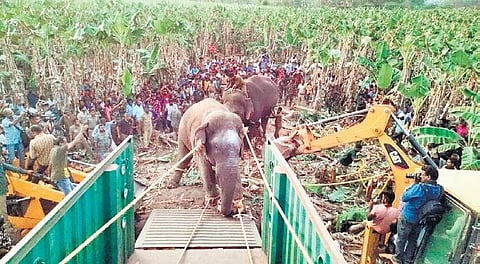

CHENNAI: The State forest department could have prevented the present ordeal of residents living on the periphery of Coimbatore if the makhna had been radio-collared when it was first captured in Dharmapuri and relocated to Anamalai Tiger Reserve (ATR) in the first week of February.
Radio-collaring is the simplest and efficient way for tracking the movement of a problematic wild animal almost on a real-time basis. When contacted, chief wildlife warden Srinivas R Reddy told TNIE that the forest department did not have stock of radio-collars at the time.
“We are now readying a proposal to procure few of them under Tamil Nadu Innovation Initiatives scheme. Fitting the collar is easy, but the tracking requires extreme skill and knowledge. When we captured and relocated the makhna elephant in the first attempt, there wasn’t enough time to form a dedicated team and establish a control room for tracking. Now, we have fitted the elephant with the radio-collar and a team has been formed.”
However, reliable sources told TNIE that the field officials at the Coimbatore forest division had a radio-collar ready at their disposal as the World Wildlife Fund (WWF), which has an office in Coimbatore, offered a radio-collar to the department. The sources said the radio-collar was removed from another makhna called Pandalur Makhna 2 or PM2, that was captured by the Kerala forest department, and returned in January.
PM2 had killed a person and injured two when it raided a house in Gudalur in November. The elephant was captured and released into Mudumalai Tiger Reserve in December. It moved into Kerala forest and roamed inside Sultan Bathery town in Wayanad causing panic and unrest there. The information on elephant’s movement was periodically provided by Tamil Nadu forest department using the radio-collar to the counterparts in Kerala.
“The radio-collar was provided by WWF-India and Kerala forest department returned it after PM2 was taken into captivity. It was at the disposal of Tamil Nadu forest department from January, but it felt unnecessary to use during the first translocation attempt of Dharmapuri makhna elephant. The decision has clearly backfired,” sources said.
In 2021, the state forest department was widely acclaimed for rewilding the tusker Rivaldo. It was achieved with the help technology, including radio-collaring. “When the state has set such an example and has rich learnings, it can’t afford to make elementary mistakes and risk people’s lives. The visuals of the makhna running around in Mudukkarai town and other human settlements in Coimbatore were scarye,” a conservationist said.