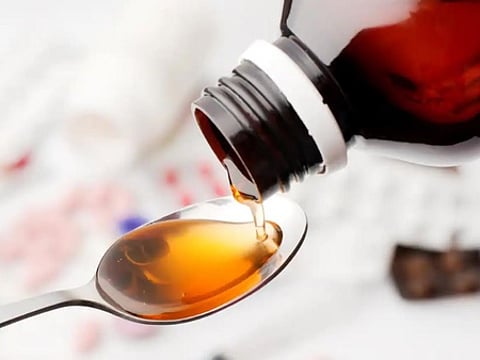

CHENNAI: The state drugs control department has shut down a drug manufacturing unit in Kancheepuram district after a particular batch of Coldrif cough syrup was found to be containing diethylene glycol, a poisonous substance which may render the medicine injurious to health.
Officials collected the samples and ran tests after receiving a communication from the Madhya Pradesh drugs control department, which flagged the death of six children over a period of one month following fever, cold, and severe kidney damage. The cough syrup is suspected to be the cause of deaths. The union health ministry is also investigating the deaths.
According to state drugs control department officials, stocks of Coldrif syrup batch which was suspected to be adulterated were drawn for urgent analysis, and additionally other four categories of syrups were also drawn for analysis from the manufacturing unit. Of the five batches tested, Coldrif syrup Batch No. SR-13 was declared “not of standard quality” and confirmed to be adulterated with 48% diethylene glycol. The other four formulations met quality standards.
Following the findings, production at the unit was stopped and officials ordered the unit to be closed down. A show-cause notice was also issued to the manufacturer.
Speaking to TNIE, S Gurubharathi, deputy director of Drugs Control and Licensing and Controlling Authority, said, diethylene glycol is a nephrotoxic and poisonous substance. It causes severe kidney damage. Diethylene glycol is an impure substance. The manufacturer didn’t add it intentionally. It is an impurity of propylene glycol ingredient which is used in the cough syrup as a solvent and it is an inactive substance.
The test report showed the presence of 48% of diethylene glycol in the syrup, he said. Three ingredients were added to the cough syrup, paracetamol, phenylephrine hydrochloride and chlorpheniramine maleate syrup. These ingredients were found to be safe. Only the inactive substance added as a solvent had impurity, added Gurubharathi. Officials further said they also noticed several non-compliance of Schedule M and Schedule L1 of Drugs Rules, 1945, at the manufacturing unit.
After the state’s drugs control department received communication from the Madhya Pradesh drugs control authority on October 1, Gurubharathi and a team comprising senior drug inspectors commenced investigation immediately and completed the probe in two days.
Following the alert, the Tamil Nadu Drugs Control Department issued a statewide ban on the sale and distribution of the contaminated batch and also alerted authorities in Odisha and Puducherry, based on distribution details recovered from the unit.
