
DHAKA: Bangladesh heads to the polls on Thursday under an unprecedented political landscape, following the sudden exit of former Prime Minister Sheikh Hasina after a mass upsurge in August 2024. The election is set to be a unique experience for voters, many of whom are casting ballots for the first time. Alongside electing members of parliament, citizens will also vote in a referendum on constitutional reforms.
The main contest is between the Bangladesh Nationalist Party (BNP) and the Bangladesh Jamaat-e-Islami. The newly formed National Citizen Party (NCP), which emerged from the mass movement against Hasina, has joined the race as part of an 11-party alliance with the Jamaat. The BNP, a seasoned political force with past stints in power, was expected to dominate in the absence of the Awami League. However, the Jamaat claims it has built a strong political base and is positioning itself as a formidable challenger.
In previous elections, the Jamaat’s support hovered below 10%, while the BNP secured over 30%. With the Awami League out of the contest, many believed the BNP would secure a comfortable majority. But the Jamaat’s renewed presence has complicated the electoral arithmetic, raising the prospect of a close fight.
The NCP, despite leading the recent movement, has struggled to maintain its earlier momentum. It is contesting just 30 out of 300 parliamentary seats under its alliance with the Jamaat. In total, around 50 parties are participating, including several left-leaning and Islamic groups. Some of these parties are aligned with the Jamaat-NCP alliance, which has also demanded a referendum on the proposed constitutional reforms.
The referendum and general election will take place on the same day. Voters will cast two ballots -- one for parliament and one for the referendum. The absence of the Awami League has left many feeling uncertain, and the referendum issue adds further complexity.
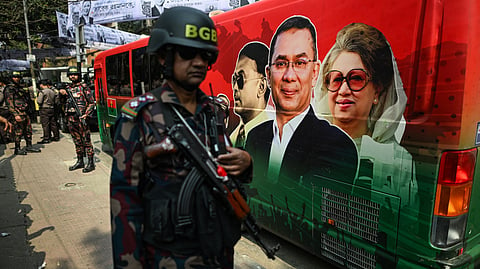
Law and order has also raised concerns. Nearly 400 incidents of election-related violence have been reported since the schedule was announced, with at least five people killed. Authorities, however, remain confident that the election will proceed peacefully. More than 700,000 security personnel have been deployed across 42,761 polling centers. While results in past elections were declared within 12 to 20 hours, the Election Commission has warned that counting may take longer this time due to the dual ballots and increased voter turnout.
Both the BNP and Jamaat have voiced suspicions about each other and criticised the Election Commission for inadequate preparation and lack of a level playing field. They have also hinted at possible manipulation and “election engineering.” Many Dhaka residents have travelled back to their hometowns to vote, with parties often covering travel expenses for supporters.
Despite pressure from local and international groups for a more inclusive poll, the election will proceed without the Awami League and other parties, raising concerns about voter turnout and legitimacy. Authorities insist the February 12 vote will shape Bangladesh’s political future and pave the way for democracy and development. While public trust in the Election Commission and other institutions remains limited, citizens are hoping for a fair and peaceful election.
(The author is a senior journalist based in Dhaka.)
