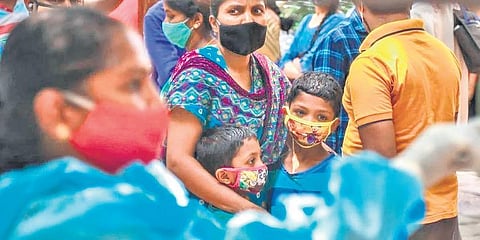

Children are more vulnerable to allergies due to their hyperactive immune system and immature capability to quickly neutralise external agents as compared to adults, says Dr Neeraj Gupta, senior consultant (paediatrics), Sir Ganga Ram Hospital, Delhi, in an interview with Ashish Srivastava. Edited excerpts:
How do you define paediatric allergies?
Allergy in general is considered as an exaggerated response by an individual’s immune system to an external agent. Whenever our body or our immune system is exposed to external agents or environmental factors of different types, our body recognises them as either harmless or harmful. If the immune system recognises them as harmless, then the body doesn’t react against them.
But for some reason, if the body considers them harmful, as self-defence, the body’s immune response works against it. And that is the main cause of allergies. Children are more vulnerable to allergies due to their hyperactive immune system and immature capability to quickly neutralise external agents as compared to adults.
The symptoms can be coughing, breathing difficulties, runny or itchy or blocked nose and rashes on the body. Some other symptoms like vomiting and severe abdominal pain can also occur.
What are the root causes behind their occurrence among children?
Allergies need two factors that work together in a given patient. The first is genetic. Whenever an allergic child comes to us, we usually ask about family history.
There may be somebody in the family with some sort of allergy, respiratory allergy, skin allergy, nose allergy, or some gastrointestinal allergy. This actually tells us about the genetic predisposition, which we usually call as atopy.
It means if a child’s father or mother or some other person who is blood relative has a history of allergy, then this increases the chances of developing allergy in this particular child. This is called the genetic predisposition, also called atopy. In a predisposed high-risk child, under certain environmental factors, they will start producing certain symptoms.
The common environmental factors could be respiratory allergens, allergens which are usually contacted by inhalation. These could be some animal danders like cats or dogs or certain pollens because of grasses, trees, weeds. Allergenic materials released or secreted by cockroaches, dust mites or fungal moulds and spores can also be airborne and thus responsible for symptoms.
Inhalation of any of these in a high risk child will be responsible for nose or chest symptoms like sneezing, running nose, blocked nose, itching in the nose or throat. It may also cause chest pain, chest tightness, coughing or breathing difficulty.
There are also other routes, like for example a person may have ingested allergenic food items. Sometimes allergens come in contact with the skin and produce eczema or dry itchy skin. So in nutshell allergies are the result of a complex interaction between genetic and environmental factors.
What are the common food items having allergens?
The common food items which are responsible for developing allergic manifestations include milk, egg, peanuts, tree nuts like almond and cashew, fish, shell-fish, prawn, shrimp, wheat and soya. Allergens like eggplant or brinjal and other fruits and vegetables can also produce symptoms.
How can parents identify the symptoms?
The common symptoms are recurrent cough, cold, breathing difficulty, chest pain, chest tightness, running or blocked or itchy nose, breathing through the mouth, snoring, and throat irritation. Abdominal pain, severe vomiting after ingesting certain food, or some itchy skin rashes can also occur.
Sometimes allergies can be life-threatening with low blood pressure or oxygen saturation. Allergic symptoms are usually round the year with seasonal variation. There can be multiple triggers in a given patient. Positive family history increases the predisposition to abnormally react to environmental triggers. Fever does not usually accompany allergic reactions.
How can this be managed?
The management can be classified in two main categories - symptomatic treatment and root cause management. In symptomatic management, nasal sprays, nebulisers or inhalers may be advised to clear chest congestion, and for other allergic symptoms, tablets or syrups may be prescribed. Ointments, creams or moisturisers are usually required for skin problems.
There are also certain allergy tests available like skin or blood tests. You need to contact your physician to know about which particular test is relevant for yourself or your child. Tests will help you to identify the possible causes which are responsible for symptoms in yourself or your child. Once you know that, you can try to implement either the specific avoidance measures or even give them specific therapies like immunotherapy to resolve the root cause. These are also called allergy vaccines. They are especially useful if started timely in a particular patient.
