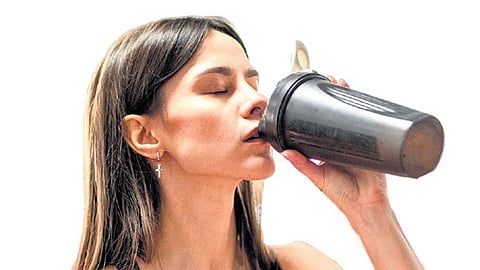

CHENNAI: Of late, high protein recipes like chicken shakes, fruit juices topped with protein supplements, protein powder cakes, shakes and ice-creams have been garnering a lot of attention on social media. This has been a cause of concern as supplements should complement, when required, and not replace food, say dieticians and doctors.
A balanced diet comprises optimal quantities of macro and micronutrients - protein is one of the macronutrients. It is a misconception that protein is required only for building muscles, weight loss and weight gain. It is important for body growth, development, healing of wounds, recovery, enzymes and hormone synthesis.
“Consumption of adequate protein can improve immunity and prevent sarcopenia (loss of muscle mass), and also provide satiety which aids in improved blood glucose control and weight management,” said Meenakshi Bajaj, convener, Network of Professionals of Food and Nutrition, and dietician, Tamil Nadu Government Multi Super Speciality Hospital.
Mind what you eat
The quality and quantity of protein are key factors while choosing protein for one’s health benefits. The first class or foods in which complete proteins can be derived from are milk, meat, fish, poultry and eggs. Since other food sources like rice, wheat, dal, whole grams, nuts have one or more amino acids deficient in them, they need to be consumed in combination. “For example, as suggested by ICMR, which released the dietary guidelines for Indians, cereal and pulses have to be consumed in appropriate ratios (3:1) to improve the quality of protein. Along with milk and milk products, traditional foods like idli, dosa, chapathi with whole grams/dal/ peas serve as complete protein sources for vegetarians,” added Bajaj.
Dr S Chandrasekar, Head Department of Medicine, Government Stanley Medical College Hospital said, proteins are required by some cells to grow. “For every reaction in our body we require proteins, fats and carbohydrates. For normal functioning of our body we need a balanced diet which contains proteins, fats and carbohydrates. Taking only protein will endanger and alter the system.”
System overload
Eating a balanced diet is essential as too much of anything is harmful for the body. If a person is overloaded on proteins, it will put a burden on the kidney. “Every month we see a couple of cases who take too much protein and land up with kidney problems,” said Dr Chandrasekar, adding that eating less protein will affect growth and development.
“The perception of daily protein intake is much higher than that of the actual requirement,” said Bajaj. Traditionally, a high protein diet comprising milk and eggs was suggested for burns and TB patients. Currently, a high protein diet is prescribed based on disease specific nutritional requirements, Bajaj added.
Not just proteins
“Unfortunately, in the name of fitness and training, unregulated over-the-counter modular protein supplements have occupied a large space of the diet, replacing natural protein sources,” said Bajaj.
“Our body requires fats, carbohydrates, and proteins in equal numbers. Giving only protein is harmful,” said Dr Chandrasekar.
Excessive protein consumption through protein supplements may cause digestive issues, nutrient imbalance, renal overload, and branched chain of amino acids in protein powders may have an influence on non-communicable diseases, said Bajaj.
What ICMR dietary guidelines say
*Obtain good quality proteins and essential amino acids through appropriate combination of food and avoid protein supplements to build muscle mass
*A balanced diet will provide required calories, proteins, vitamins, minerals and adequate fibre
*All cereal or millet based diets are accompanied with adequate pulses or beans for good quality protein and fibre
*A daily balanced diet will have 60-70g of proteins, which is higher than what we require
