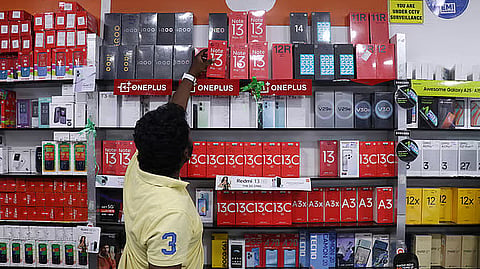

NEW DELHI: In 2024, Blinkit, a quick-commerce app, made headlines by announcing it would deliver the latest iPhone 16 series smartphones within a few minutes.
The news quickly grabbed attention and received widespread praise on social media.
The company began offering the iPhone 16 series to customers in Delhi NCR, Mumbai, Pune, and Bengaluru. While many users lauded the move, it drew the ire of offline retailers. These retailers, who have been selling smartphones for years, raised concerns about the potential impact on their market.
According to reports, in recent months, several major smartphone brands—including Samsung, Motorola, Itel, Lava, POCO, and Xiaomi—have begun listing their products on Zepto, further eroding the market share of traditional retailers. Recently, Vivo also started selling its entry-level models, the Y18i and Y29, with an exclusive 5% ICICI Bank discount on purchases above Rs 5,000.
What’s the matter?
After Blinkit successfully delivered the iPhone 16 series, other brands began listing their products on quick-commerce apps like Zepto and Blinkit, which promise deliveries within ten to twelve minutes. Over the past few months, nearly every major mobile brand has joined the trend, offering their products for sale on these platforms.
Offline mobile retailers have long been critical of online sales channels, accusing smartphone brands of prioritising platforms like Flipkart and Amazon, which they claim harms their business. With the new partnerships between smartphone brands and quick-commerce companies, retailers fear further competition and the disruption of traditional retail structures. They argue that such tie-ups fuel the grey market and erode the trust they’ve built with customers over time.
The All India Mobile Retailers Association (AIMRA), which represents 1.5 lakh retailers in the country, has voiced concerns saying that quick-commerce platforms do not add value to brands but instead disrupt the retail network. They warned that short-term sales strategies could destabilize long-term relationships with retailers.
AIMRA’s national joint secretary, Navneet Pathak, wrote a letter to Vivo India CEO Jerome Chen, highlighting the significant growth Vivo has experienced through its partnerships with mainline retailers, which he says contributed to the company’s rise to the No. 1 position in the Indian market.
What experts say
Faisal Kawoosa, founder of TechArc, agrees with the concerns of offline retailers, calling their demands reasonable. He believes using quick-commerce platforms to sell smartphones could harm traditional retailers by taking away their advantage of immediate product availability. On the other hand, some believe that by 2025, more types of electronics—like smartwatches, TWS earbuds, and accessories—will be sold on quick-commerce platforms, with smartphones being just the start. Major laptop makers such as HP, Lenovo, Acer, and Asus have already started listing their products on these platforms. HP, for example, recently partnered with Blinkit to sell laptops, monitors, printers, and accessories. Acer has also listed some of its products on Zepto and Flipkart Minutes in select areas.
Some analysts, however, believe quick-commerce companies will primarily compete with online retailers like Flipkart and Amazon and will likely capture a larger share of the market in the future.
