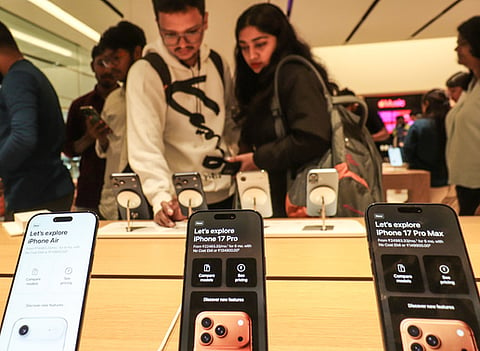

India’s average selling price (ASP) of mobile phones is expected to remain below $250 (₹22,100) in 2025, according to a report by Counterpoint Research. This means that, on average, people in India will spend less than $250 on a mobile phone this year. In comparison, the global ASP is projected to reach $370 (₹32,800) in the same period. However, the report also notes that, due to premiumisation, India’s ASP is expected to gradually increase to $287 (₹25,400) by 2029. This growth is being driven by the migration from feature phones to smartphones, rising demand in rural and semi-urban areas, and increasing digital adoption across the country.
“India will continue to support the mid-range segment, with its ASP remaining below $250 in 2025 but gradually increasing amid premiumisation to reach $287 by 2029,” reads the report.
Global ASP trends
Globally, the average selling price of smartphones is steadily rising. In 2024, the ASP stood at around $357 and is expected to climb to $370 in 2025, eventually reaching $412 by 2029. This reflects a compounded annual growth rate (CAGR) of 3%. According to the report, this upward trend is fuelled by consumers opting for more premium devices and the growing adoption of 5G technology, even in mid-range models.
North America continues to be the most premium smartphone market, with ASP expected to grow 7% in 2025, reaching nearly $984 by 2026. China’s smartphone ASP is forecast to rise 3.6% in 2025, driven by strong performance from local brands like Huawei, OPPO, and Vivo, alongside solid sales of premium Apple models.
Brand-wise ASP leaders
In terms of brands, Apple continues to dominate the premium smartphone market. The iPhone’s ASP is projected to increase from $919 in 2025 to nearly $1,000 by 2029. According to Counterpoint Research, Apple is following a dual strategy: expanding in emerging markets with more affordable models like the iPhone ‘e’ and ‘Air’, while maintaining its premium status through Pro models and a foldable iPhone expected in 2026.
Between 2026 and 2029, regions like the US, China, and Europe will remain Apple’s strongest markets. Meanwhile, price-sensitive markets such as Latin America, the Middle East and Africa, and India will see higher year-on-year shipment growth, driven largely by the demand for base and older-generation iPhones.
Samsung, Apple’s closest competitor, is expected to keep its ASP relatively stable. However, weaker sales of flagship models in early 2025 could slightly lower its ASP. Still, growth may be supported by its foldables and GenAI (AI-powered) smartphones. Samsung’s heavy presence in the mid-tier segment, especially in emerging markets, is likely to limit its ASP growth.
Other Android brands like Xiaomi, OPPO, and Vivo are also pursuing premiumisation, but their ASP growth remains modest, mainly due to weak demand in key markets like China and India.
In China, Huawei is seeing a strong ASP rebound. With improved supply chain conditions and growing interest in its Mate and P series foldables, the brand is regaining momentum. Its loyal HarmonyOS user base is also allowing Huawei to maintain premium pricing, although its international presence remains limited.
Role of technology in ASP growth
New technologies, especially AI and foldables, are pushing up production costs but are also increasing the value of smartphones. For example, GenAI smartphones have added roughly $40-60 to the bill of materials (BoM) per device. As AI technology matures, consumers are expected to willingly pay more for enhanced features and experiences.
Though foldable phones still make up less than 2% of global shipments, their high ASP is helping raise overall averages. Apple’s anticipated foldable iPhone in 2026 could further boost global ASPs and set new benchmarks for the segment.
