

Myth: Thalassemia is contagious
Fact: Thalassemia is passed from parents to their off-springs through the defective gene. It cannot spread to others through touch, sharing food or utensils, or through cough and cold.
Myth: Only children of affected parents get thalassemia
Fact: If both parents are carriers (thalassemia minor/trait), they can have a child with thalassemia major, even if the parents are completely healthy and have never required transfusion. Each pregnancy has a 25% chance of thalassemia major, 50% chance of thalassemia minor (carrier) and 25% chance of normal child. Hence, there is 75% chance for a mother to continue pregnancy as children with thalassemia minor are asymptomatic and are considered disease free. Carrier screening before marriage or pregnancy is very important and is now made mandatory in antenatal screening.
Myth: Thalassemia minor is a disease
Fact: Thalassemia minor (trait) is not a disease. Carriers usually live normal lives and may have only mild anaemia. They are normal individuals and are not considered patients.
Myth: Blood transfusions can cure thalassemia
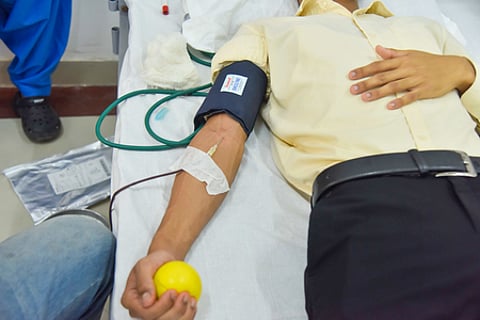
Fact: Regular transfusions help patients with thalassemia major to survive and grow normally, but they do not cure the disease. They only replace defective red cells. Blood transfusions should be individualised and haemoglobin level should be maintained around 10 gm to have normal growth and development of children.
The only established curative option (so far) is allogeneic stem cell transplant as cellular therapy is still evolving. For allogeneic stem cell transplant (HSCT), full HLA matched sibling donor (MSD) is the best donor for stem cells, if a matched sibling is available. Else, matched unrelated donor (MUD) stem cells can be obtained from stem cell registries of India like DATRI, MDRI and DKMS following donor search. Half matched stem cell transplant which is known as haploidentical transplant is an option for patients who do not have either a MSD or MUD.
Myth: Thalassemia is not serious enough to justify transplant
Fact: Without cure, patients face lifelong transfusions, iron overload complications (cardiac, hepatic, endocrine) and reduced life expectancy while transplant offers potential cure and improved quality of life.
Myth: Gene therapy has completely replaced transplant
Fact: Gene therapy is promising but expensive and not widely available in many countries. Allogeneic transplant remains the most established curative option globally.
Myth: Transplant is unaffordable for most families
Fact: In countries like India, government schemes and charitable initiatives support transplant in eligible patients. Long-term transfusion and chelation therapy can also be financially burdensome. Allogeneic transplant may be considered a cheaper option as it cures the patient.
Myth: All patients will develop severe graft-versus-host disease (GVHD)
Fact: GVHD risk depends on donor type and protocol. Modern GVHD prophylaxis has significantly reduced severe GVHD rates, especially in matched sibling transplants.
Myth: Patients with thalassemia cannot live long
Fact: With modern care (regular transfusions, iron chelation and monitoring), many patients now survive well into adulthood and lead productive lives. Unlike lifelong transfusions and chelation, successful transplant now offers a one-time curative treatment and long-term medication is usually not required once immune recovery is complete (except in cases with chronic GVHD).
Myth: Thalassemia cannot be prevented
Fact: Thalassemia major is preventable through carrier screening, genetic counseling, prenatal diagnosis (CVS/amniocentesis) and preimplantation genetic testing. Countries like Cyprus and Italy have significantly reduced new cases through national screening programmes.
Myth: Marriage between carriers should be banned
Fact: This is a social misconception. Instead of banning marriage, couples should receive genetic counseling and be informed about reproductive options.