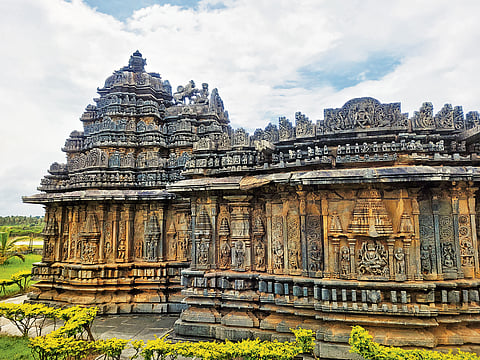

The Hoysalas were among South India’s most prominent dynasties, ruling across present-day Karnataka and parts of Andhra Pradesh, Telangana and Tamil Nadu. While Belur and Halebeedu remain their most celebrated monuments, the villages around Hassan are home to several lesser-known Archaeological Survey of India-protected temples that are equally fascinating.
About 187 kilometres from Bengaluru, Hassan is a comfortable three-hour drive via NH 75. We left before sunrise and reached the city in time for breakfast at Sri Krishna Hotel on BM Road. The crisp rava dosa, fluffy idlis and vada with sweet sambar made for the perfect start to the day. The hotel also offers clean, affordable rooms, while Hoysala Village Resort is a good option for those looking for a more luxurious stay. A strong cup of Chikkamagaluru coffee later, we set off towards our first stop.
According to folklore and several stone inscriptions, the Hoysala dynasty traces its origins to Sasakapura in present-day Chikkamagaluru district. Legend has it that a young prince named Sala was studying under the Jain monk Sudatta when a tiger attacked and that incident became the emblem. Historically, the Hoysalas rose to prominence under Nripa Kama II during the 11th century.
Our first stop was the Lakshmi Devi Temple at Doddagaddavalli, 16 kilometres north of Hassan on the Belur Road. Built in the early 12th century, it is among the oldest surviving Hoysala temples and reflects an architectural transition from the Kadamba style to the intricate craftsmanship that later defined Belur and Halebeedu. The temple is believed to have remained unfinished after its patron, merchant Kullahana Rahuta, passed away before construction was completed. It is also one of the few temples where Goddess Kali is worshipped in her peaceful shanta swaroopa rather than her fierce manifestation.
The second stop, about 13 kilometres south of Hassan on the Holenarasipura Road, was the twin temple complex at Mosale. Built during the reign of Veera Ballala II, the identical shrines dedicated to Shiva and Vishnu symbolise harmony between the Shaivite and Vaishnavite traditions. Inside are carvings depicting Bhookailasa and Vaikuntha, while the sanctums house a 2.5-foot Shivalinga and a six-foot Chennakeshava idol. Following the theft of several rare sculptures in 2014, visitors are now permitted to photograph only the courtyards and exteriors.
As all three temples are located in small villages, there are no restaurants nearby. We returned to Hassan for lunch at Annapurna Café in Hemavatinagar, where a traditional South Indian meal, fresh chapatis, bajjis and a serving of ottu shavige with coconut chutney provided the perfect break before the final stop.

About 12 kilometres north-east of Hassan, just off the Arasikere Road, stands the Shri Bucheshvara Swamy Temple at Koravangala. Set beside a lake and adjoining the ruins of the Shri Nageshwara and Govindeshwara temples, the complex is built as a dvikuta temple with two interconnected shrines. A 1,000-year-old Ganesha idol was stolen from the temple in 2020, highlighting the continued need to preserve these monuments. These temples make for a fun trip from Bengaluru!