
NEW DELHI: Women make up just 30 per cent of artificial intelligence professionals globally and hold only 16 per cent of AI research roles, UN Women said on Tuesday, warning that the gender gap in AI development is hardwiring bias into one of the world's most transformative technologies.
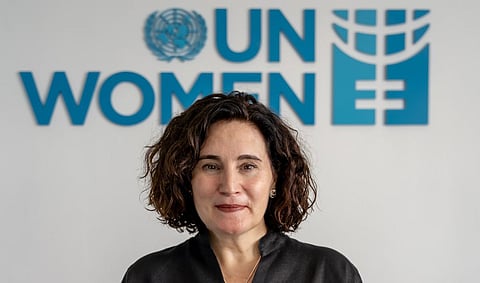
Speaking after the launch of the AI Casebook on Gender and Agriculture as part of the AI Summit, UN Women Regional Director for Asia Pacific Christine Arab said the underrepresentation of women in AI is creating a systemic "design gap" with far-reaching consequences.
"When women are missing from design tables, the test labs, the term sheets and bias doesn't emerge by accident. It becomes the default," Arab said, cautioning that fewer women building AI systems inevitably means fewer tools that reflect women's lived realities.
She stressed that this imbalance has tangible impacts across sectors critical to women, including health, financial inclusion, climate resilience and personal safety. Technologies trained and tested without diverse participation risk reinforcing existing inequalities rather than narrowing them, she said.
Arab, however, singled out India for taking visible steps to address the gender divide in emerging technologies.
"India stands among the very few globally who are taking this seriously," she said, adding that no country has yet fully solved the problem. "We are all, as a globe, still learning. And that is precisely what makes what the Government of India is doing so significant."
'AI must be written by all, not just a select few'
Beyond representation in labs and boardrooms, Arab flagged the economic risks AI poses to women workers. Citing a joint analysis by UN Women and LinkedIn, she noted that nearly 80 per cent of women across Asia and the Pacific are employed in job categories classified as "augmented or disrupted" by AI. The outcome, she said, will depend heavily on policy choices.
"With the right skilling and protections, augmentation can be a springboard, not a setback and the opportunity is enormous," Arab said, underscoring the need for proactive investment in training and safeguards.
The AI Casebook on Gender and Agriculture, unveiled at the summit, showcases 26 deployed and scalable AI solutions aimed at improving crop planning, strengthening farm operations, expanding market access and enhancing financial resilience for farmers.
Urging governments, investors and researchers to back these initiatives, Arab described the featured projects as "not just stories" but "solutions".
"AI must be written by all of society," she said. "Not just by the select few."
