
Policing cannot be a university's first response to protest
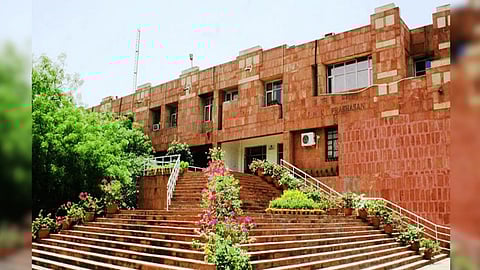
Once again, Jawaharlal Nehru University finds itself in the middle of a political storm. A student protest, slogans caught on video, police complaints, threats of suspension and expulsion—the script feels painfully familiar. From the 2016 Afzal Guru controversy to the violence of January 2020, and now to the latest protest, JNU continues to be treated less as a university and more as a battleground.
The immediate issue this time is sloganeering against Prime Minister Narendra Modi and Home Minister Amit Shah. The university administration has called the slogans objectionable and anti-national, filed a police complaint, and warned of strict punishment. Political parties have jumped in, each reading the protest through their own lens—frustration, conspiracy or sedition.
Crude or personalised sloganeering against constitutional office-holders, indeed, deserves criticism rather than romanticisation. As politics in action, it is low-hanging fruit that serves no cause and only weakens the moral force of dissent instead of strengthening it. That is unlikely to be the objective of student leaders, so it behoves them to be less foolhardy, especially in an already-fraught campus like JNU. But the larger question is not just about one set of slogans. It is also about why student dissent today is viewed with such deep suspicion.
Indian politics is full of leaders who came up through student movements. The JP movement of the 1970s, campus politics in the 1980s, and the Mandal-era protests of the 1990s all shaped the country's democratic journey. Those movements were loud, angry, often uncomfortable. Yet they were recognised as political expressions, not treated automatically as crimes.
What has changed is not the nature of student protest, but how the state responds to it. Today, dissent tends to be pushed too quickly and seamlessly into the category of law and order or, even less convincingly, national security. Students are no longer seen as young citizens testing ideas and authority, but at best as troublemakers who need to be disciplined, at worst as fifth columnists.
This shift has an ideological edge. The current ruling class has positioned itself against left and liberal politics, and campuses like JNU are seen as their natural enemy. In this framing, protest is not seen as disagreement—it is branded as secession. Once that line is crossed, dialogue becomes impossible, and punishment becomes the default response.
History offers a warning here. Suppressing dissent does not eliminate anger; it drives it underground. Universities become spaces of fear rather than debate. Students learn silence instead of citizenship. A democracy that cannot tolerate student protests risks producing leaders who know how to rule, but not how to listen.
India's strength has always come from its noisy arguments, not enforced calm. Treating every protest as a threat may offer short-term control, but in the long run, it weakens the very foundations of democratic life. Both sides, even in their extreme positions, must have the larger objective of keeping India's dialogic space alive.