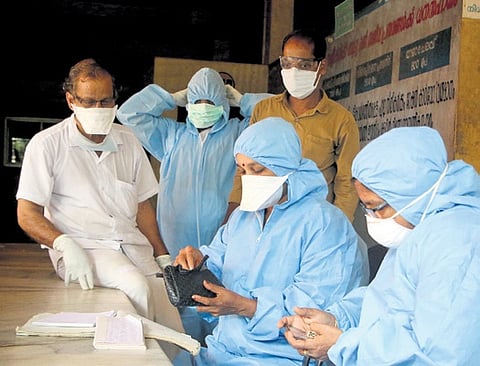

CHENNAI: A fresh outbreak of the Nipah virus in India has prompted heightened vigilance across Asia, with several countries introducing health screenings at international airports to reduce the risk of cross-border transmission. The developments reflect growing regional concern over the virus’s high fatality rate and the absence of a widely available vaccine or specific antiviral treatment, making early detection and isolation the most effective tools to contain its spread.
Health authorities in India have confirmed multiple Nipah infections in West Bengal, including cases among healthcare workers, triggering an aggressive containment response. Patients have been isolated, close contacts placed under home quarantine, and surveillance stepped up in affected districts. The outbreak has also led the central government to deploy specialist teams to assist state authorities with epidemiological investigations, contact tracing and infection-control measures in hospitals.
The situation in India has reverberated quickly across neighbouring countries and popular travel hubs. Airports in Thailand, Nepal and Taiwan, among others, have begun screening passengers arriving from India and other high-risk locations. These checks include temperature monitoring, visual assessment for symptoms, and health declaration forms designed to flag travellers who may require further medical evaluation. In some airports, public health officials are distributing advisory cards that explain symptoms and provide guidance on what travellers should do if they feel unwell after arrival.
Thai authorities have introduced screening at major international gateways including Bangkok’s Suvarnabhumi and Don Mueang airports as well as Phuket, a key tourist destination. Officials there have stressed that no Nipah cases have been detected in the country so far and that the measures are precautionary. Selected hospitals have been placed on standby to receive and manage any suspected infections should they arise.
Nepal has raised its alert level at Tribhuvan International Airport in Kathmandu and at major land border crossings with India, deploying health desks to check incoming travellers. Taiwan has reinforced surveillance at its ports of entry and issued health advisories urging travellers to monitor themselves for symptoms after travel. Indonesia has also tightened quarantine and health declaration procedures at its main international airport near Jakarta.
Public health experts note that while these airport screenings are important, the Nipah virus differs significantly from respiratory viruses such as COVID-19. Nipah transmission is usually linked to close contact with infected bodily fluids or contaminated food, and people are not typically contagious before symptoms appear. This reduces, though does not eliminate, the likelihood of in-flight spread. As a result, authorities are focusing on identifying symptomatic travellers and ensuring rapid referral to medical care.
The symptoms of Nipah infection can range from fever, headache and muscle pain to cough and breathing difficulty, and in severe cases can progress to encephalitis, or inflammation of the brain. The disease has caused fatal outbreaks in South and Southeast Asia in the past, reinforcing the urgency with which governments are treating the current situation.
Indian officials have said the outbreak remains limited and under close watch, with containment measures aimed at preventing wider community transmission. At the same time, the swift introduction of airport screenings across Asia underscores how lessons from past pandemics have reshaped regional preparedness, with governments choosing early, visible interventions even when the number of cases is small.
For travellers, authorities are advising cooperation with screening procedures, careful monitoring of health after arrival, and prompt reporting of any symptoms. As surveillance continues in India and abroad, health agencies across the region remain on alert, balancing the need to keep borders open with the imperative of preventing another dangerous virus from gaining a wider foothold.
