
INTERVIEW | India will not find easy market, need to push domestic consumption: Former agriculture secretary
It is difficult for India to find an alternative market to absorb the US unilateral tariff shock. In the meantime, the Government should increase domestic consumption while not imposing restrictions on certain foods during certain festivals.
In an interview, Siraj Hussain, former Secretary to the Ministry of Agriculture and Farmers Welfare, tells TNIE how India should strategise to tackle tariffs imposed by the US. He also underlined that politicians speak with caution and electronic media should be accountable in reporting will give negotiation space to policymakers.
How will the US tariffs impact India's rural economy overall?
The impact on the overall rural and agriculture-based economy is likely to be marginal, but certain sectors will be badly affected.
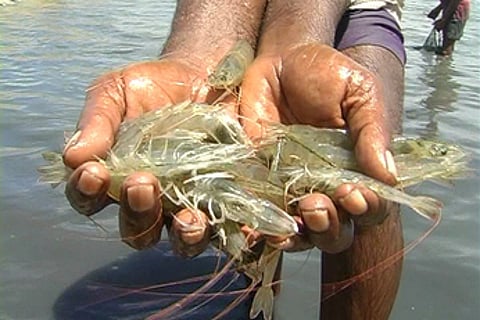
India’s exports of frozen shrimps and prawns to the US were $1.89 billion in 2024. India was the major source of imports into the US in this category with a 40 per cent share. US importers would rather import from Ecuador, where only a 15 per cent tariff is payable. Seafood imports from India into the US also face an anti-dumping duty of 1.8-3 per cent and a countervailing duty of 5.7 per cent.
Similarly, rice exports of $408.6 million will suffer as imports of Thai and Pakistani rice will face a tariff of only 19 per cent, while Indian rice exports face a tariff of 50 per cent.
Does the unilateral tariff action by the US violate the core provisions of WTO agreements, or is it within the WTO mandates? Will this weaken developed countries' pressure on India to maintain a public stock of grain for food security?
Yes, unilateral imposition of different rates of tariff violates the basic principle of the WTO, which is the concept of Most Favoured Nation. As of now, there is no discussion on buffer stocking of food grains in India, but in the past, the US and several other countries have objected to the MSP and procurement policies of the Government.
For example, in its May 2018 communication to the WTO, the USA had submitted that the entire production of wheat and rice should be considered for the calculation of support rather than the quantity procured.
What is the most significant opportunity that India has missed by not striking a deal? Conversely, what has India gained by not finalising a deal?
The conditions asked by the US in negotiations are not precisely known, as they are not in the public domain. But the insistence on stopping the purchase of oil from Russia could not have been accepted by India for strategic reasons. Therefore, in the short term, it can be said that Indian exports will face a higher tariff than those of India's competitors. The additional 25per cent tariff will become effective on August 27, 2025, and it is quite possible that the US may review the same.
In the seafood sector, approximately 35 per cent of exports go to the US. The Government of India (GoI) has stated that it will seek other avenues to compensate for potential losses. Is it easy for India to forgo the US market?
It is not easy to find alternative export markets. Indian exporters will be exploring the markets in EU, UK, Japan, China and West Asia. Consumption in the domestic market may also increase if state governments in India do not impose periodic restrictions during certain festivals.
India is the largest producer of milk in the world. Despite this, counterfeit dairy products are being sold in the open market, especially during festive seasons, raising serious health concerns. How do you view India’s decision not to import dairy to meet domestic demand?
It is true that the implementation of food safety norms prescribed by the FSSAI is often violated by unscrupulous players. We do need much better implementation of these laws. Import of dairy products at low duty will adversely impact the livelihood. For premium dairy products, India can consider a lower duty if US authorities can certify that the cattle have been given non-meat feed or that they are pasture-grazed. For example, in the American market, milk packs declare that artificial growth hormone was not given to cows.
There is a prevailing view in India that the country should transition from tariff-based protectionism to productivity-driven competitiveness. Is it practical for India to achieve this level of competitiveness in the near future?
In the short term, it could be disastrous for domestic producers and manufacturers if imports are allowed at zero duty or very low tariffs. For example, car manufacturing in Australia completely ended by 2017.
What is the way forward from the current crisis? Will the Prime Minister's call to use ‘indigenous’ products or to ‘increase domestic consumption’ be effective in the near future?
I think the negotiations with the US will continue. On strategic considerations, India is too important for the US to be antagonised by the imposition of impractical tariffs.
Indian politicians, including ministers at the Centre, would do well to speak with caution when discussing trade negotiations. Similarly, electronic media should conduct informed discussions with experts rather than doing sensational coverage.
They should provide space to the Government to conduct negotiations with the US.