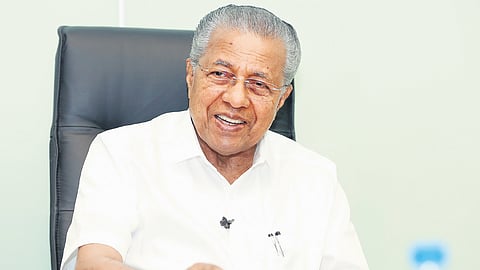

NEW DELHI: The Supreme Court on Friday allowed the Kerala government to withdraw its pleas against the state Governor over the delay in approving bills passed by the state assembly.
"We allow the petitioner to withdraw the plea," said a two-judge bench of Justices P. S. Narasimha and A. S. Chandurkar.
The top court passed the order after former Attorney General of India and senior advocate K. K. Venugopal, appearing for the Kerala government, sought the withdrawal of the plea, citing that the issue had become infructuous in view of the recent judgment passed on April 8 in the Tamil Nadu Governor case.
During the course of the hearing on Friday, Attorney General R. Venkataramani and Solicitor General Tushar Mehta, the top and senior law officers of the Centre opposed the Kerala government’s submission for withdrawal of the plea and urged the court to await its decision on the President’s reference under Article 143 of the Constitution regarding the grant of assent to bills.
"Let the matter be heard. The Tamil Nadu judgment (of April 8) perhaps needs to be referred to a larger Bench. There is also a Presidential reference now," the Attorney General submitted.
Eventually, however, the top court refused to entertain the Union's plea and allowed the Kerala government to withdraw its petition.
The Kerala government had moved the apex court last year, claiming inaction on the part of the Governor concerning several bills passed by the state legislature.
The Supreme Court had earlier issued notices to the Centre and the Additional Chief Secretary to the Kerala Governor, asking them to file a detailed reply on the issue.
In its petition, the Kerala government challenged the Governor's decision to keep several bills pending for months, either by refusing to assent to them or by reserving them for the President’s consideration.
Venugopal had earlier urged the apex court to lay down guidelines on when Governors can return or refer bills.
"This is a confusion in the minds of various Governors in the country regarding what their powers are in relation to assenting to bills. In the present (Kerala) case, out of eight bills, two had been kept pending for 23 months, one for 15 months, another for 13 months, and others for 10 months. It is a very sad state of affairs. This confusion among Governors, whereby they keep bills pending, is against the Constitution," the former Attorney General told the apex court.
Venugopal further said that the court should clarify when Governors can refuse assent and when they can refer bills to the President.
In its petition filed under Article 32 of the Constitution, the Kerala government also challenged the reconsideration and action of President Droupadi Murmu in withholding assent to four out of the seven bills referred by the Kerala Governor.
The Kerala government argued that none of the bills referred to the President related to Centre-State relations and, therefore, did not require Presidential assent.
