
India on Wednesday welcomed a temporary ceasefire between the US, Israel and Iran and expressed hope that the move would lead to a "lasting peace in West Asia."
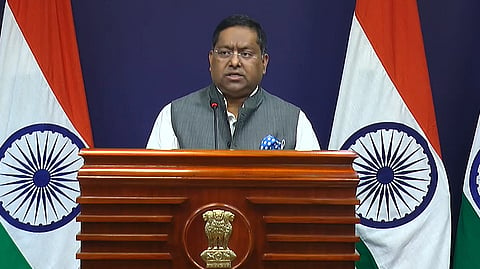
In an official statement, the Ministry of External Affairs noted that India has been advocating for de-escalation in the region.
"As we have continuously advocated earlier, de-escalation, dialogue and diplomacy are essential to bring an early end to the ongoing conflict," the statement read.
India also expressed hope that a smooth flow of commerce will happen through the Strait of Hormuz, which Iran has agreed to open as part of the ceasefire.
"The conflict has already caused immense suffering to people and disrupted global energy supply and trade networks. We expect that unimpeded freedom of navigation and global flow of commerce would prevail through the Strait of Hormuz," the MEA said.
The MEA did not mention the role of Pakistan, which, according to US and Iranian leaders, successfully brokered the ceasefire.
Meanwhile, despite the ceasefire, the Indian Embassy in Tehran on Wednesday issued a fresh advisory urging all Indian nationals still in the country to leave at the earliest, citing the evolving situation on the ground.
"In continuation of the advisory of 07 April 2026, and in light of recent developments, Indian nationals still in Iran are strongly advised to expeditiously exit Iran, in coordination with the Embassy and using the routes suggested by the Embassy," it said.
US President Donald Trump on Tuesday pulled back on his threats of a major attack on Iran, with less than two hours before his deadline and announced a temporary halt to military hostilities between Washington and Iran.
According to Trump and Iranian Foreign Minister Abbas Araghchi, the US and Iran have agreed to a two-week ceasefire that includes the reopening of the Strait of Hormuz.
Iran's Supreme National Security Council said it has accepted the ceasefire and that it would negotiate with the United States in Islamabad beginning Friday.
Araghchi said passage through the strait would be allowed under Iranian military management. The plan includes allowing both Iran and Oman to charge fees on ships transiting through the Strait of Hormuz.
