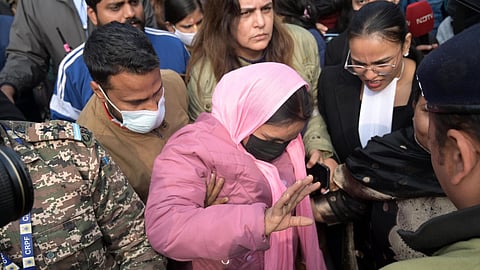

The survivor of the 2017 Unnao rape case on Saturday appealed for public support, alleging that the daughters of rape accused and former BJP MLA Kuldeep Singh Sengar and their supporters are exposing her identity on social media, endangering her safety.
In a video message, the survivor said that for the past several days, her identity has been circulated widely across social media platforms.
“Kuldeep Singh Sengar’s two daughters and their supporters are exposing my identity everywhere – on Facebook, Instagram, everywhere,” she said, adding that the online campaign has left her fearful and vulnerable.
Sengar, once a powerful Uttar Pradesh legislator, was convicted in December 2019 for the rape of a minor and sentenced to life imprisonment.
The survivor’s latest appeal comes amid renewed public debate following recent court proceedings and online mobilisation by Sengar’s family.
On January 1, she had posted a message urging people to stand with her beyond caste lines, alleging that she and her husband have been subjected to a sustained smear campaign on social media.
Her statement followed posts by one of Sengar’s daughters on X, in which she claimed her father was innocent and sought public support. “I am also a daughter of this country. Please become my voice. A criminal has no caste,” the survivor said in her video message.
SC stays bail
The Supreme Court on December 29 stayed a Delhi high court order that had suspended Sengar’s life sentence and granted him bail. The apex court directed that Sengar would not be released from custody.
The Court was hearing the Central Bureau of Investigation’s plea challenging the high court’s December 23 order. Solicitor General Tushar Mehta, appearing for the CBI, described the crime as a “horrific rape” of a minor and emphasised that Sengar was a powerful MLA at the time. “We are answerable to the child who was 15 years and 10 months old,” Mehta told the court.
The Delhi high court, while granting bail, had noted that Sengar had already served over seven years in prison and raised questions about whether an elected representative qualifies as a “public servant” under the Indian Penal Code for the purposes of the POCSO Act. The high court’s order had triggered protests by the survivor, her family and rights activists.
Meanwhile, the survivor and her mother welcomed the Supreme Court’s intervention and vowed to continue the legal fight "until he is hanged."