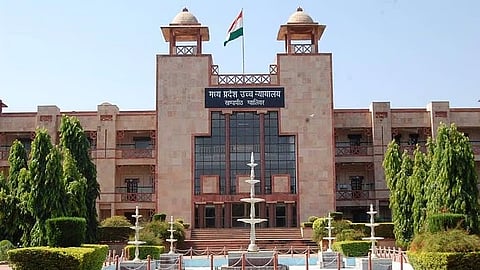

BHOPAL: A month after deaths started happening in the country’s cleanest city, Indore’s Bhagirathpura locality, due to contaminated water supply, the Madhya Pradesh High Court has questioned the state government as to on what basis only 16 out of 23 deaths found to have happened due to the water endemic.
On Tuesday, the Madhya Pradesh High Court’s double judge bench in Indore, comprising Justices Vijay Kumar Shukla and Alok Awasthi, resumed hearing of the bunch of petitions related to the deaths of residents of Bhagirathpura due to the recent water epidemic.
As the state government through its counsel, submitted the progress and status report in the matter before the HC’s division bench, the Court questioned as to how many deaths had actually happened due to water contamination, particularly in the light of media reports putting the death toll between 28 and 30.
Submitting a report in the case, the government counsel said a five-member death audit committee of associate and assistant professors from MGM Medical College, Indore, found that 16 of the 23 deaths were caused by an epidemic triggered by contaminated water, while reports on five other deaths are still awaited.
However, the advocates appearing for the petitioners, led by senior counsel Ajay Bagaria, argued that the report submitted by the government was vague and not even worth the paper on which it was written.
“They (authorities) should have been a little more serious, careful and considerate before submitting the report in the court. The elements of fairness are conspicuously missing, the deaths have been audited by a committee which comprises professors of government medical college on the basis of information and case sheets supplied by the district’s chief medical and health officer and other health department officials. How can we expect it to be fair when all those involved in the process are government employees,” Bagaria argued.
“The report is not just vague, but shrouded in mystery and seems to be an attempt, having been made to cover up everything that has happened. While the government first stated in the hearing today that 16 out of the 23 deaths have been found to have happened due to water contamination triggered epidemic, the elements of uncertainty exist (no remarks) exists in connection with those 16 deaths as well as the remaining seven other deaths. There is something more than fishy which is going on regarding the deaths,” Bagaria argued.
In his observations, senior High Court judge Vijay Kumar Shukla noted that the government had failed to satisfy the court on the basis on which the deaths were audited and whether they were conclusively linked to the epidemic caused by contaminated water.
“According to you (the petitioners’ lawyer) the report on deaths is eyewash, even they (the government counsels) aren’t sure about the number of deaths and their causes. We want to know from them (authorities) the basis of the report.”
Responding to the arguments by the petitioners’ counsel as well as observations by the HC, the government counsel submitted that a detailed report summing up the cases/factual details of each death so far will be submitted before the Court.
“We will also ensure that at least one of the experts (associate or assistant professors of MGM Medical College) forming the five members-strong Death Audit Committee probing the deaths of Bhagirathpura residents, is present before the HC in the next hearing, for presenting technical insights on the issue.
Verbal Autopsy
The Indore district’s chief medical and health officer (CMHO) Dr Madhav Hassani, when asked by the Court about the death audit, said that each death was audited by the committee based on the information (from media and other sources), case status and verbal autopsy.
However, when asked by the HC, about what actually was verbal autopsy, the CMHO said it related to deaths of those patients, who died at home or whose sufficient hospital records aren’t available. “Verbal autopsy implies details shared by attendants/family members of such deceased patients.”
However, the HC remained unsatisfied with the CMHO and the government counsel’s reply on the issue.
The term Verbal Autopsy, however, actually exists in medical terminology. As defined by the World Health Organization (WHO), a verbal autopsy (VA) is a method to determine the cause of death by interviewing caregivers or family members of the deceased using a structured questionnaire. It is designed for community-level data collection, particularly in areas lacking medical certification of deaths.
‘Drinking water situation in Indore is really very alarming,’ observes HC Judge
While the order after the long hearing on Tuesday was reserved by the two-judge bench, the senior HC judge Vijay Kumar Shukla observed, “The situation is very alarming, particularly after reports of water contamination coming from other parts of Indore, including Mhow. So, nobody is finally safe, After, hearing this case (Bhagirathpura deaths), our first reaction was to find out who cleans the High Court’s water supply tank. The concerned contractor was called, verified and we got the tank cleaned immediately. No one can be sure about getting safe drinking water here (Indore). Situation of drinking water is really very alarming.”
Pipelines and contaminated water supply in Bhagirathpura
Appearing during the hearing, the Indore Municipal Corporation (IMC) counsel said that the water contamination didn’t just happen due to drinking water and sewer lines running parallel at some points, but also occurred possibly due to water contamination of the main pipeline, supplying water from the main overhead water supply tank in Bhagirathpura.
Out of Bhagirathpura area’s total 26 km pipeline network, around 9.5 km pipeline has already been replaced with new pipeline, while work is underway to replace the remaining around 70% pipeline.
“Samples of water being supplied through the new pipelines have been tested in labs and the results have revealed that it was potable. With water now being supplied to remaining residents of Bhagirathpura via water tankers, we’ve also ensured the safety of that water, by testing samples of water tanks from which the tankers are getting the water for supply in Bhagirathpura,” the IMC counsel submitted.
Rs 10 lakh compensation demanded
Another senior advocate representing the petitioners, expressed dissatisfaction over the Rs 2 lakh initial compensation paid to each of the 21 bereaved families by the authorities via the Red Cross Society. “Few years back, Rs 5 lakh compensation was paid to each family, which lost their loved ones in a well collapse in another part of Indore. Then why just Rs 2 lakh compensation here for every family, which lost its members due to negligence of the authorities. The government needs to pay Rs 10 lakh compensation and also register a case of culpable homicide not amounting to murder against the erring officials,” the senior advocate demanded.
Monitoring Committee
In line with the last hearing (January 20) in the matter, the government counsel proposed to the HC, constituting a monitoring committee, comprising three retired chief engineers of the Public Health Engineering Department, an IIT-Indore professor and a retired general manager of the Jal Nigam, for hearing the grievances of residents on daily basis.
While opposing the members proposed for the committee, the petitioners’ advocate Ajay Bagaria said “We will submit alternative names soon for being included in the committee, as those whose names were proposed by the government, were actually serving or retired government servants.”
