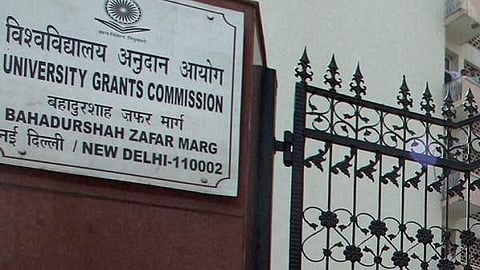

JAIPUR: A political and social controversy has erupted in Rajasthan following the notification of new University Grants Commission (UGC) regulations, with several upper-caste organisations warning of statewide protests if the norms are not withdrawn or amended.
The Shri Rajput Karni Sena, a social outfit of the Rajput Community and the Marwar Rajput Mahasabha have issued warnings to both the central and state governments, alleging that the new rules are intended to curtail the rights of upper-caste communities.
Mansingh Medtiya, Jodhpur president of the Shri Rajput Karni Sena, claimed that the regulations were brought in to “suppress upper castes” and said the organisation would strongly oppose their implementation.
Medtiya said the Karni Sena is in the process of finalising its protest strategy and will intensify its agitation in the coming days. Several social organisations supporting the opposition to the rules have also warned of launching a large-scale movement across the state if the regulations remain unchanged.
Escalating the agitation, Medtiya, who also serves as the state secretary and media in-charge of the Shri Rajput Karni Sena, announced that a bandh (shutdown) will be observed in Jodhpur on February 1. He said multiple social organisations would support the shutdown.
Hanuman Singh Khangta, president of the Marwar Rajput Mahasabha, outright rejected the new UGC rules, alleging that they are designed to suppress the upper-caste community. Warning of a protest movement if amendments are not made, Khangta said that belonging to the general category is not a crime, but the new law could expose members of the community to false cases.
Meanwhile, a new organisation named S-4 has been formed in Rajasthan to oppose the UGC’s move. The platform comprises Brahmin, Rajput, Vaishya, and Kayastha organisations. Swami Anand Swaroop, in a video posted on X, said a coordination committee has been formed in Jaipur, bringing together the Karni Sena, Kayastha Mahasabha, Brahmin organisations, and Vaishya bodies.
The committee, named the Savarna Samaj Coordination Committee, aims to coordinate upper-caste (general category) organisations across the country. Swaroop asserted that unity among upper-caste groups was essential, warning that failure to unite would lead to their decline, while unity would strengthen resistance against what he described as opposing forces.
The controversy centres on the Equity in Higher Education Regulations, 2026, implemented by the UGC this year. The regulations are aimed at preventing discrimination in universities and colleges and ensuring equal opportunities for students and staff.
Under the new framework, every higher education institution is required to establish an Equal Opportunity Centre, constitute special committees to address discrimination-related complaints, and operate a 24-hour helpline. Institutions must also resolve complaints within a specified timeframe, failing which the UGC can initiate action or impose penalties.
Students and teachers were among the first to raise objections to the regulations, arguing that the provisions are vague and overly broad. Critics claim several aspects of the rules lack clarity, grant excessive powers to institutional committees, and do not include adequate safeguards against false or malicious complaints. Concerns have also been raised about inconsistent implementation across colleges, triggering protests by students and teachers in several states.
