
BENGALURU: For Bengaluru and Karnataka, 2025 was another year where mobility dominated public conversation, not for breakthroughs alone but for delays, disruptions and decisions that reshaped how people move. From Metro milestones and missed deadlines to policy flip-flops and infrastructure setbacks, transport remained both a promise and a pain point.
Bike taxis remained a contentious issue in Karnataka through the year. After operating in a grey zone for years, the state government moved to regulate and eventually curb app-based bike taxi services, citing safety and legal concerns, and banned the bike taxi services. The decision affected thousands of riders who relied on bike taxis for last-mile connectivity, particularly in traffic-heavy Bengaluru. While traditional auto and cab unions welcomed the move, commuters were left with fewer affordable options.
Kempegowda International Airport (KIA) saw moments of chaos in 2025, with flight delays, cancellations and access road congestion due to the Indigo meltdown. As passengers were left stranded, the airport turned into a refugee camp for days together – the airport saw a minimum of 100 flights cancelled every day for over a week. In addition to the cancelled flights, passengers were also unable to get their luggages as they were already checked in.
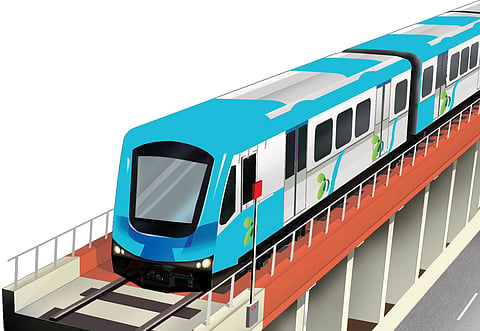
The Bengaluru Metro continued to expand, but not without frustration. The biggest disappointment was the Pink Line (Kalena Agrahara to Nagawara), which was widely expected to open partially in September this year. Delays in procuring rolling stock, construction delays and pending safety approvals pushed the opening to mid 2026, prolonging hardship for commuters along key corridors in north and south Bengaluru.
At the same time, 2025 also delivered a long-awaited win. After years of delays, the Yellow Line connecting RV Road to Bommasandra finally opened, bringing Metro services to the Electronic City IT corridor. For thousands of tech workers who had endured long, traffic-choked commutes, the line’s launch marked a significant shift, easing pressure on Hosur Road and offering a reliable alternative to road travel.
The Bengaluru Suburban Railway Project (BSRP) suffered one of its biggest setbacks yet when Larsen & Toubro (L&T) terminated its contract to execute Corridors 2 and 4, citing delays in land handover. The exit pushed the already delayed project further into uncertainty, halting construction on critical stretches. While Corridor 2 has since been re-tendered, Corridor 4 remains stalled, reinforcing concerns that Bengaluru may lose yet another crucial year in suburban rail implementation.
After nearly four years, auto rickshaw fares in Namma Bengaluru were revised from Rs 30 for the first 2km to Rs 36. The fare for every subsequent kilometre has been revised to Rs 18 from the existing Rs 15. The move was met with a lot of opposition as the auto unions were dissatisfied with the fare and demanded that the minimum fare be set at Rs 40.
