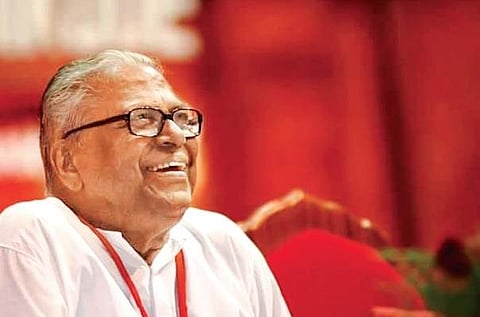

THIRUVANANTHAPURAM: With the World Health Organisation (WHO) having issued a stark warning on July 22 about the potential for a global Chikungunya epidemic, mirroring the early signs of a major outbreak two decades ago, health experts are reflecting on the critical role played by the then Kerala Chief Minister V S Achuthanandan in helping combat the disease and building a long-term system for infectious disease surveillance.
Back in 2007, when the state accounted for more than half of India’s suspected Chikungunya cases, VS, then 83, defied the complacency of his own health department and made a pivotal visit to Cherthala in Alappuzha, one of the worst-affected areas. His direct interaction with patients became a turning point.
“The department initially downplayed the outbreak,” recalled Dr Althaf A, epidemiologist and professor at the Government Medical College, Thiruvananthapuram.
“But VS insisted on seeing the situation first-hand. He questioned expert claims that Chikungunya didn’t cause deaths, pointing out that patients with comorbidities were dying disproportionately in outbreak zones.”
VS’ challenge prompted a rethink in the medical community. At the time, textbooks did not classify Chikungunya as potentially fatal. However, later findings confirmed the virus could indeed lead to death, especially in vulnerable populations.
Following his visit, VS initiated swift and decisive action. He convened an all-party meeting, turning a politically sensitive issue into a coordinated health response. Under his leadership, the then Health Minister P K Sreemathi overhauled the healthcare system’s response mechanism.
Heads rolled in the directorate of health services and the government set up the State Disease Control and Monitoring Cell (SDCMC) to enhance surveillance. Remarkably, it functioned right near the minister’s residence for rapid coordination.
The reforms under his administration went beyond crisis management. They included the establishment of more primary health centres (PHCs), a health university, dedicated surveillance and research wings, and a mandatory residency system for medical graduates, among others.
However, public health experts have since criticised the disbanding of the SDCMC by the subsequent government. “We felt its absence when the Nipah virus struck in 2018,” said Dr Althaf, underscoring the long-term importance of institutional memory and preparedness.
Chikungunya, a mosquito-borne viral disease, causes high fever and severe joint pain, often leaving patients debilitated. The WHO said it was picking up exactly the same early warning signs as in a major outbreak two decades ago and wanted to prevent a repeat.
