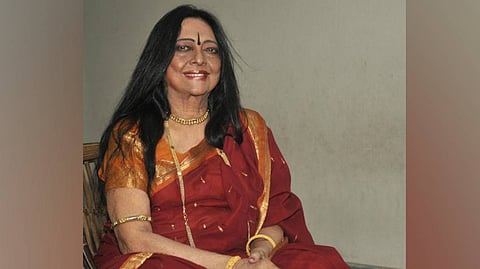

Yamini Krishnamurti (1940-2024) was the doyenne of Indian classical dance for over four decades. She excelled in Bharatanatyam, Kuchipudi and Odissi.
I had seen her dance, mesmerized, from when I was six. In 1995-96, at Sardar Khushwant Singh’s behest, I interviewed her for over a year and wrote her life story as if in her voice. It was an intense, illuminating endeavour, retelling the early cultural history of modern India through her life.
Here is a tidbit from this incandescent dancer’s story, when Old India met New. This is a slice of what Yamini Krishnamurthy had to share:
"I played my part eagerly in some of modern India's most exciting and idealistic decades. There was a new sense of confidence, a new elan in the people. As with every civilization, this found expression through art, and music and dance societies sprang up across India. It was in such a congenial and expectant climate that my dance steps led me centre-stage…
During my initial training at Kalakshetra, Rukmini Devi took us on a dancing tour in Tamil Nadu. One morning, she took me with her to visit Veenabhashini, once the leading devadasi of Thanjavur. I was deeply impressed by Veenabhashini's beauty and dignity and her pretty little house in a small street near the temple. Athai (Rukmini Devi) asked her to sing a few padams, those lyrical love songs that allow for rich emotive expression.

Veenabhashini glided with controlled grace into Tamarasaksha in mellifluous Telugu in the ancient raga YadukulaKambodhi, set in the seven-beat tala called Misrachapu. It was a 17th century composition by the poet Kshetragna. Its lyrical beauty came through as Veenabhashini crooned ‘O Lotus-eyed One, she is waiting for you, when will you go to her?’
This was the dutika (messenger) valiantly and sincerely confronting Krishna and begging Him to meet her lovelorn friend, the naayika (heroine). ‘Tears flow from her eyes, I cannot bear to watch the fire of separation burn her’, the song went.
I felt my own eyes mist over in a rush of sympathy for that poor girl. It didn't matter that I was not in love with anybody like she was. It was the padam's quality of intense human longing, of wanting something so badly that it hurt, that came through in Veenabhashini’s portrayal.
Alas, that Veenabhashini's world of nuances has vanished. She sat like a lady of quality in her own house, dwelling rightfully in the shadow of her temple, and performed with pride."